
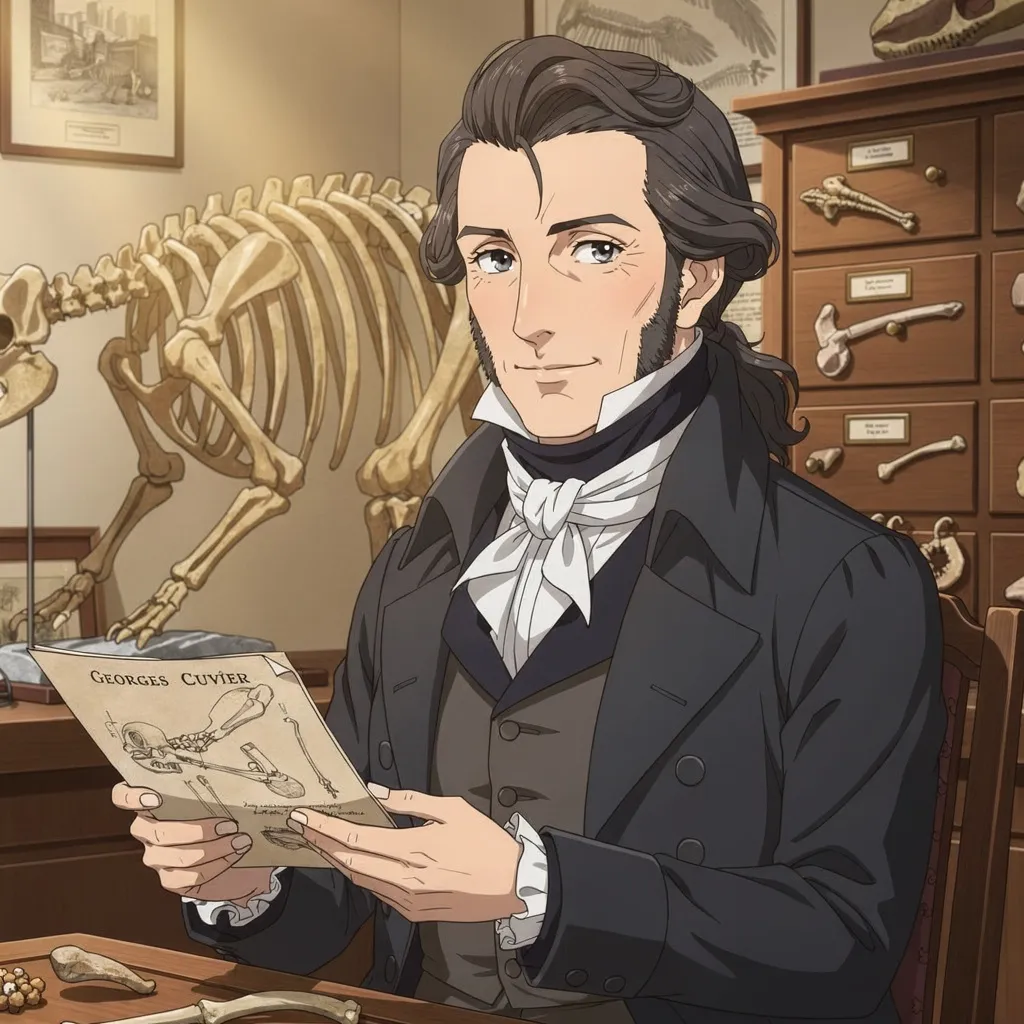
Helping to start the science of paleontology and showing that some animals from the past became extinct.
Helping to start the science of paleontology and showing that some animals from the past became extinct.
Georges Cuvier was born in 1769 in a small town in France. As a child, he loved nature and spent hours observing animals, plants, and rocks. He was especially curious about how animals were built and why they looked different from one another.
Cuvier was a great student and enjoyed reading books about science. He studied hard and learned many languages, which helped him read science books from all over Europe. This strong love of learning helped him become a famous scientist later in life.
As an adult, Cuvier moved to Paris, where he worked at a museum filled with animal bones and fossils. He carefully studied skeletons and compared them to living animals. This careful comparing is called comparative anatomy, and Cuvier became very good at it.
By studying fossils, Cuvier discovered something surprising. He realized that some animals found as fossils did not exist anymore. This helped prove the idea of extinction, which means that some species disappear forever. At the time, many people did not believe this could happen.
Georges Cuvier is often called one of the founders of paleontology, the science of studying fossils. He showed that scientists could learn about ancient animals by studying their bones. He could even tell what an animal looked like by just a few bones!
Cuvier also helped organize animals into groups based on how their bodies worked. This made it easier for scientists to study and understand the animal kingdom. His work helped museums arrange their collections in smarter ways.
Cuvier’s ideas changed how people thought about Earth’s history. He showed that the world had changed many times long before humans existed. His careful methods taught scientists to use evidence and observation to learn about the past.
Today, scientists still use ideas that Cuvier developed. Fossil hunters, museum scientists, and paleontologists all build on his work. His curiosity and careful thinking continue to inspire young scientists everywhere.
Georges Cuvier believed that learning never stopped. He showed that asking questions and studying details can lead to big discoveries. His life reminds us that even small clues can help solve giant mysteries about our planet.
Georges Cuvier could identify an animal using just a single bone.
He helped prove that extinction is real, which was a brand-new idea in his time.
Cuvier worked in one of the largest natural history museums in the world.
He was so good at studying skeletons that people called him a "bone detective."
3 min read · Developing-reader friendly
Open a word for a short explanation.
Information used to support or test an idea.
Think of an answer, then open each card to check.
Helping to start the science of paleontology and showing that some animals from the past became extinct.
1769-1832
French
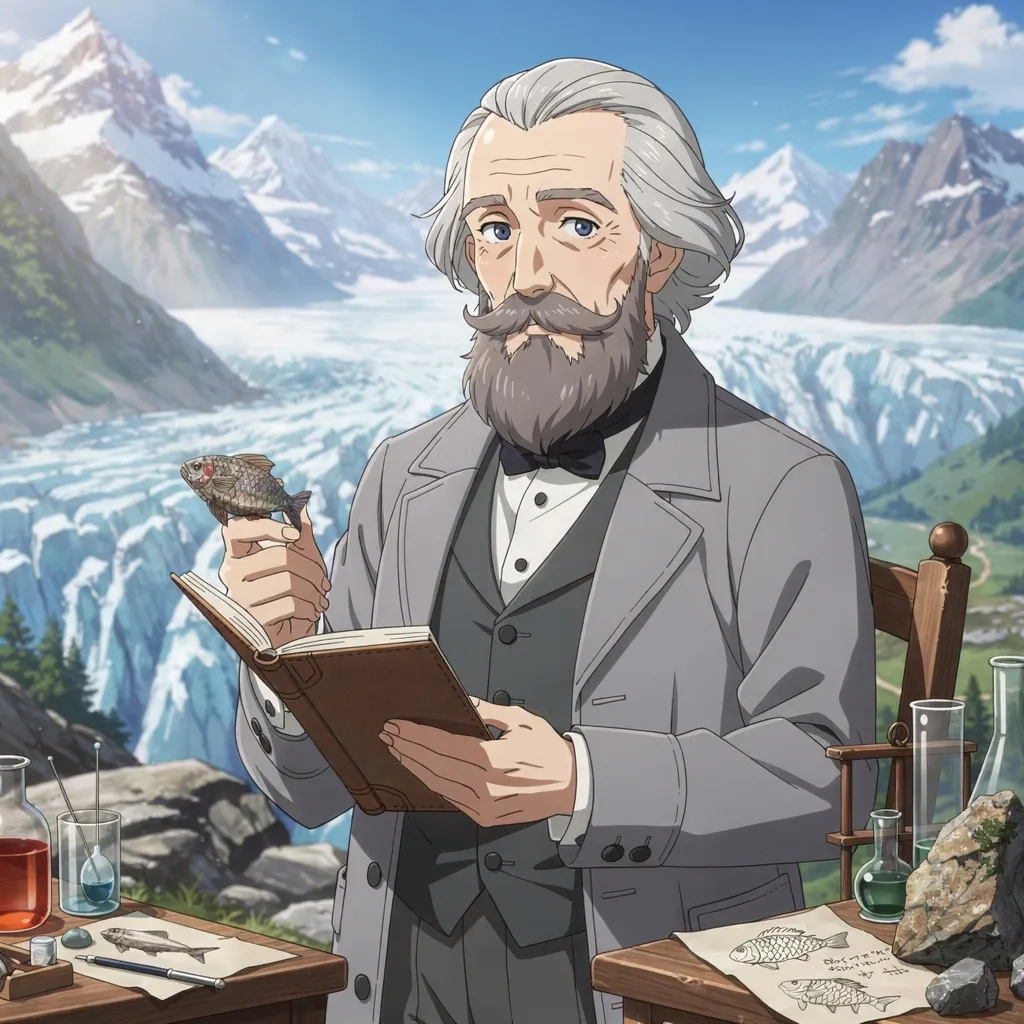
He was a scientist who studied nature and helped people understand glaciers, fish, and fossils.
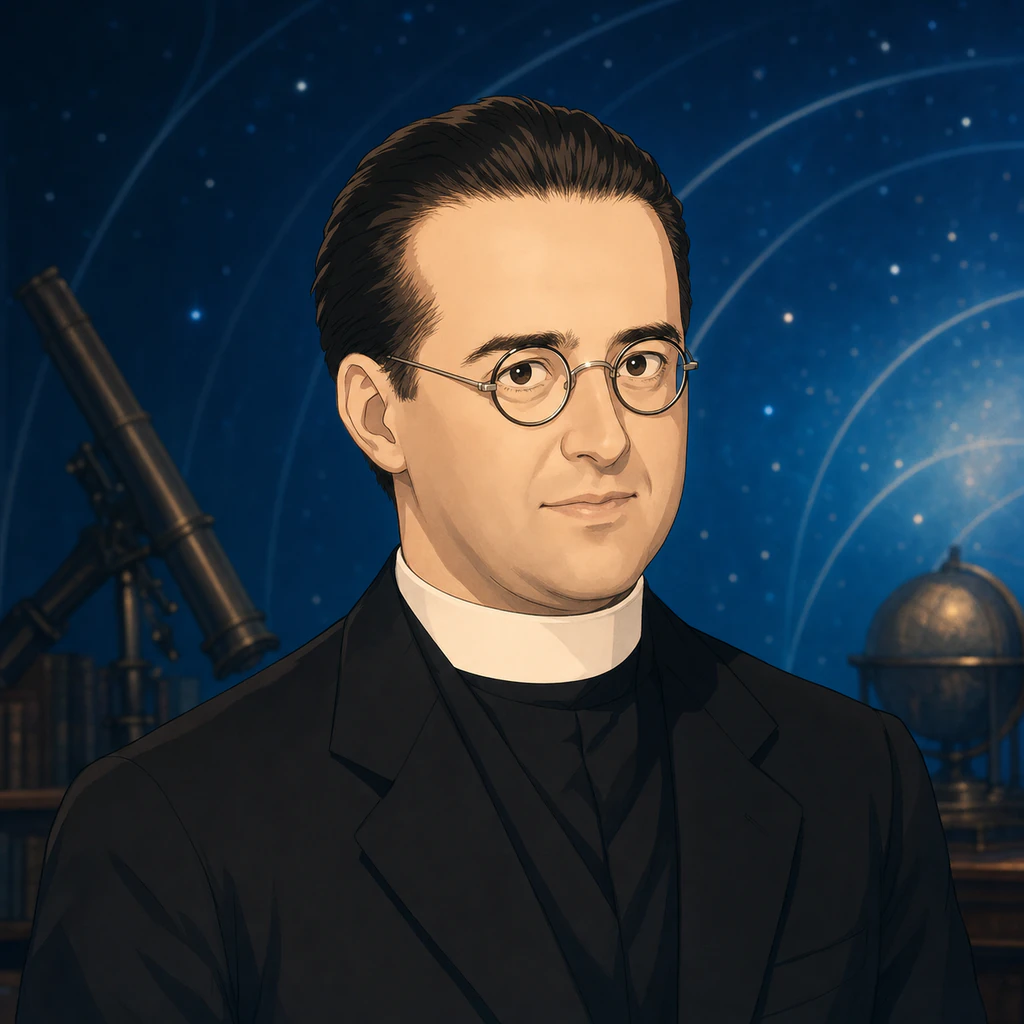
He helped explain that the universe is expanding and began with the Big Bang.
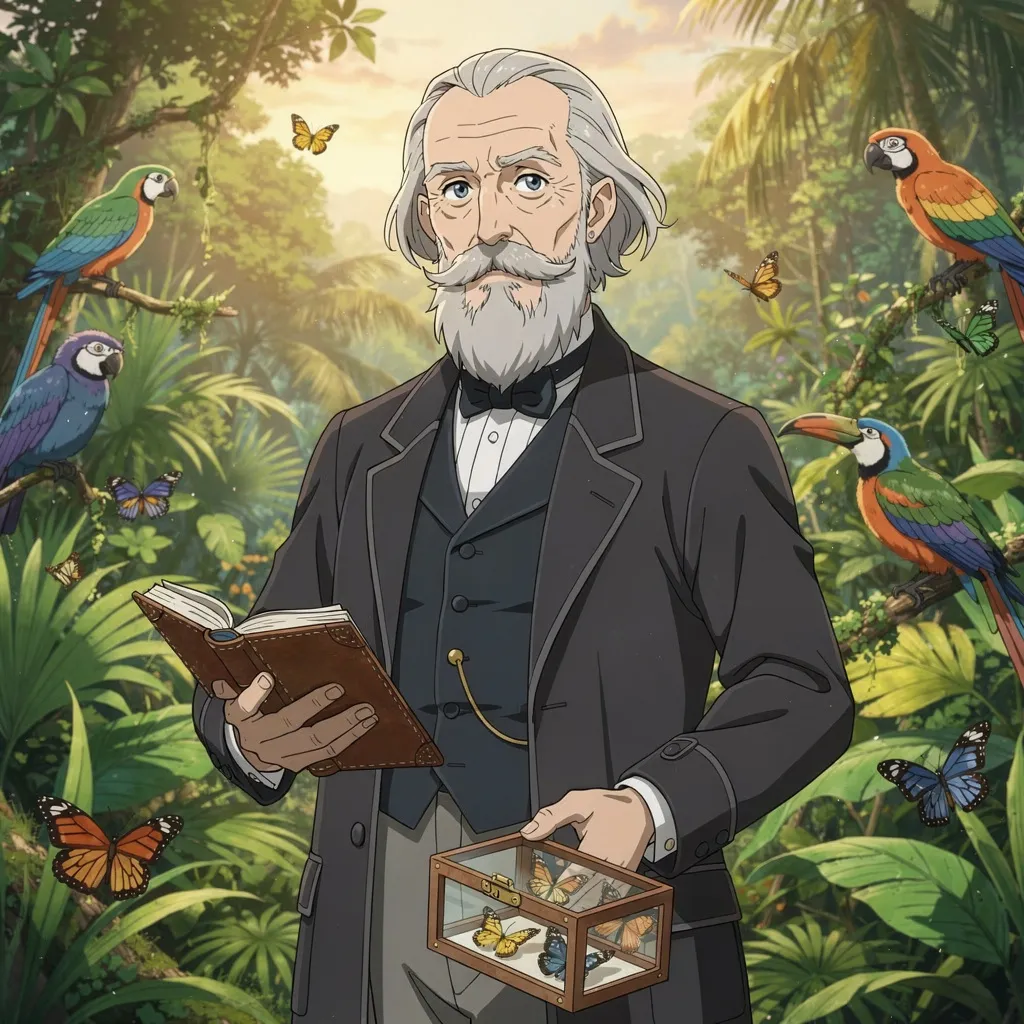
Helping discover the idea of evolution by natural selection.
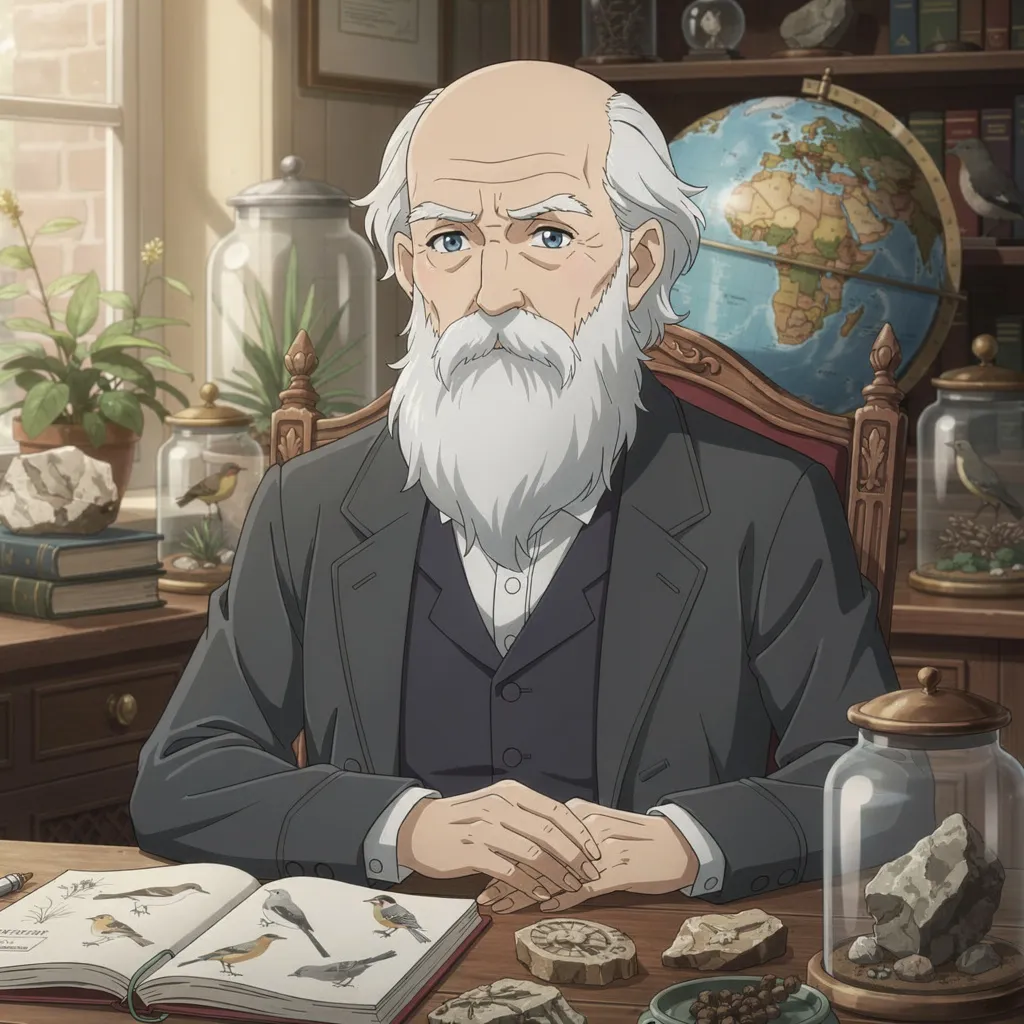
He was a scientist who explained how living things change over time through a process called evolution.
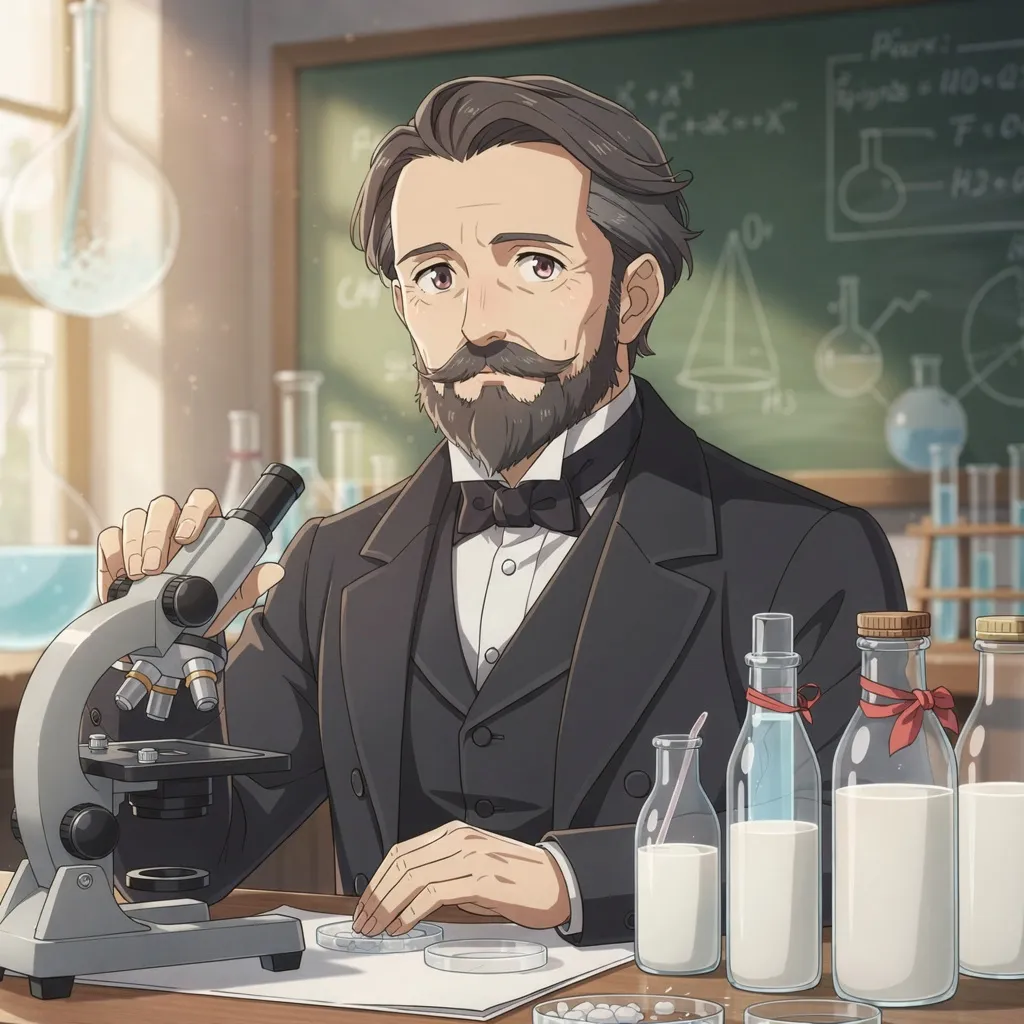
Proving that germs cause disease and creating pasteurization to keep food safe
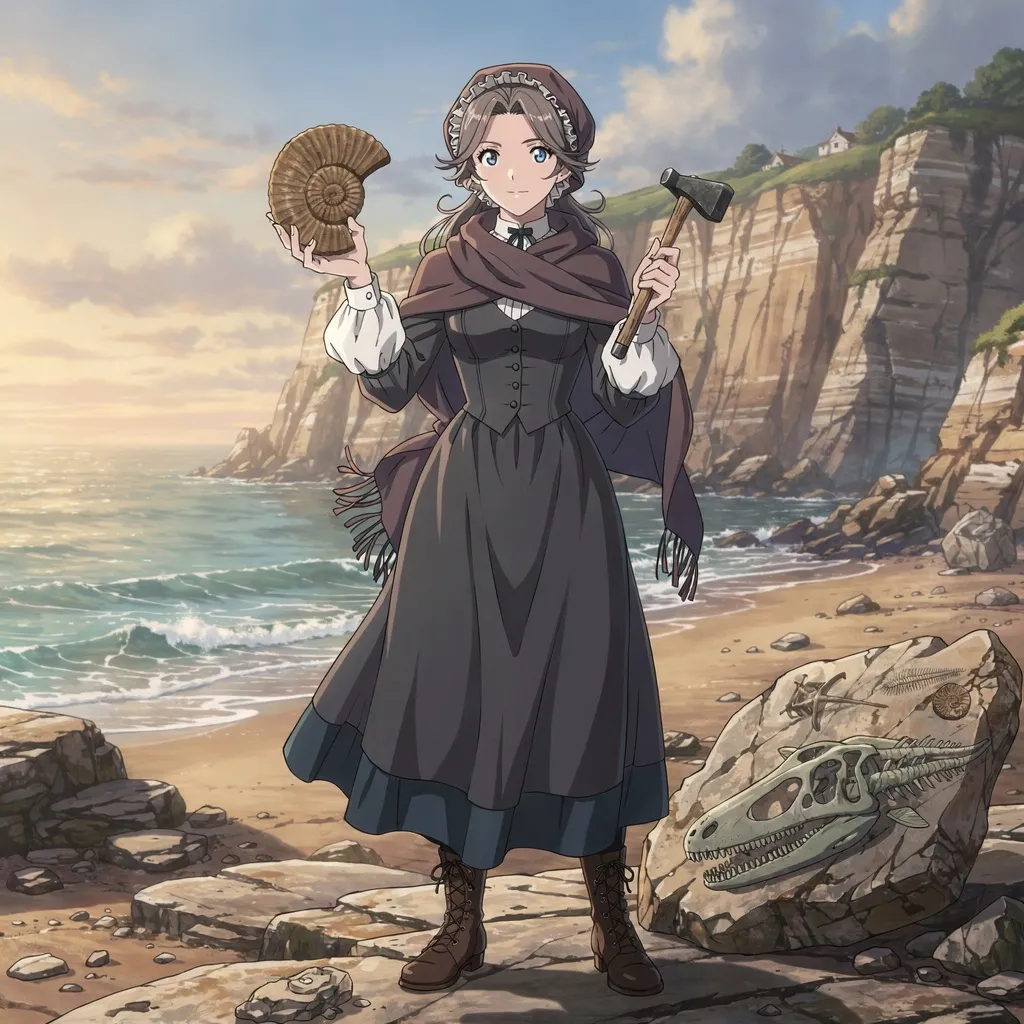
Discovering important fossils that helped people understand prehistoric marine reptiles and ancient sea life
Explore inspiring lives across science, art, history, music, and more.