
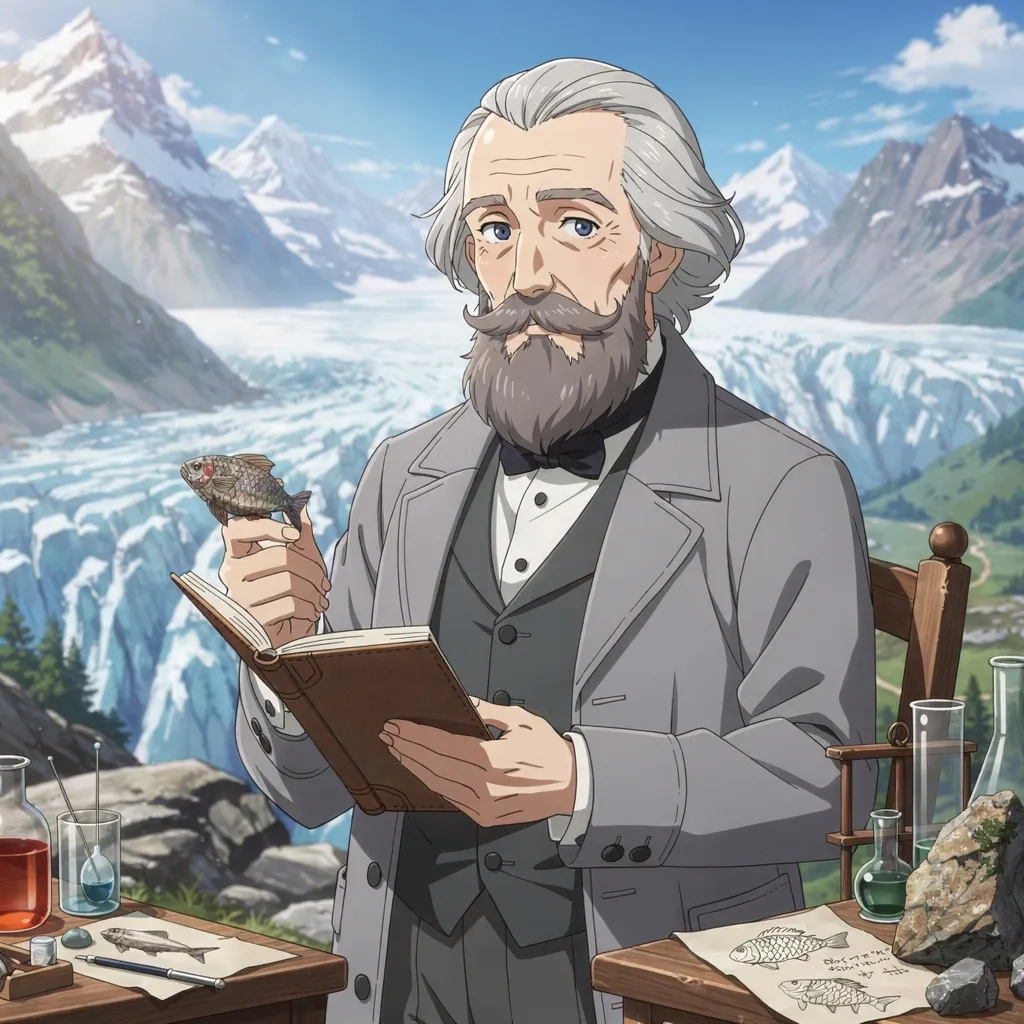
He was a scientist who studied nature and helped people understand glaciers, fish, and fossils.
He was a scientist who studied nature and helped people understand glaciers, fish, and fossils.
Louis Agassiz was born in 1807 in a small village in Switzerland. As a child, he loved exploring the outdoors, collecting rocks, plants, and insects. His father was a pastor, and his family encouraged him to be curious and ask questions about the world.
Louis enjoyed school and worked very hard. He studied science and medicine at universities in Switzerland, Germany, and France. Even when he was young, he dreamed of becoming a great scientist who could help others learn.
Louis Agassiz became a naturalist, which means someone who studies nature. He was especially interested in fish, fossils, and the history of the Earth. He spent many hours drawing and carefully describing what he observed.
One of his biggest interests was glaciers. Glaciers are huge, slow-moving rivers of ice found in cold places. Louis studied them closely and noticed clues that showed glaciers once covered much more of the Earth long ago.
Louis Agassiz is famous for helping explain the Ice Age. He taught that long ago, much of the Earth was colder and covered with ice. This was an exciting and surprising idea at the time, and it helped scientists better understand Earth’s past.
He also wrote important books about fish and fossils. His drawings were very detailed and helped other scientists learn. Louis believed that studying nature carefully was the best way to understand it.
Later in his life, Louis moved to the United States. He became a professor at Harvard University, where he loved teaching students. He made his classes fun by bringing in real specimens like shells, bones, and rocks.
Louis encouraged his students to observe for themselves instead of just reading books. Many of his students became scientists too, inspired by his excitement and passion.
Louis Agassiz is remembered as a scientist who helped people see Earth in a new way. His work on glaciers and fossils helped shape modern science.
Even today, his love for nature and learning reminds us how important curiosity and careful observation can be.
He loved drawing fish so much that he became famous for his detailed sketches.
He helped make glaciers an important topic in science.
Some mountains, lakes, and even animals were named after him.
He believed the best way to learn science was by observing nature closely.
2 min read · Developing-reader friendly
Think of an answer, then open each card to check.
He was a scientist who studied nature and helped people understand glaciers, fish, and fossils.
1807-1873
Swiss-American
Helping discover the idea of evolution by natural selection.
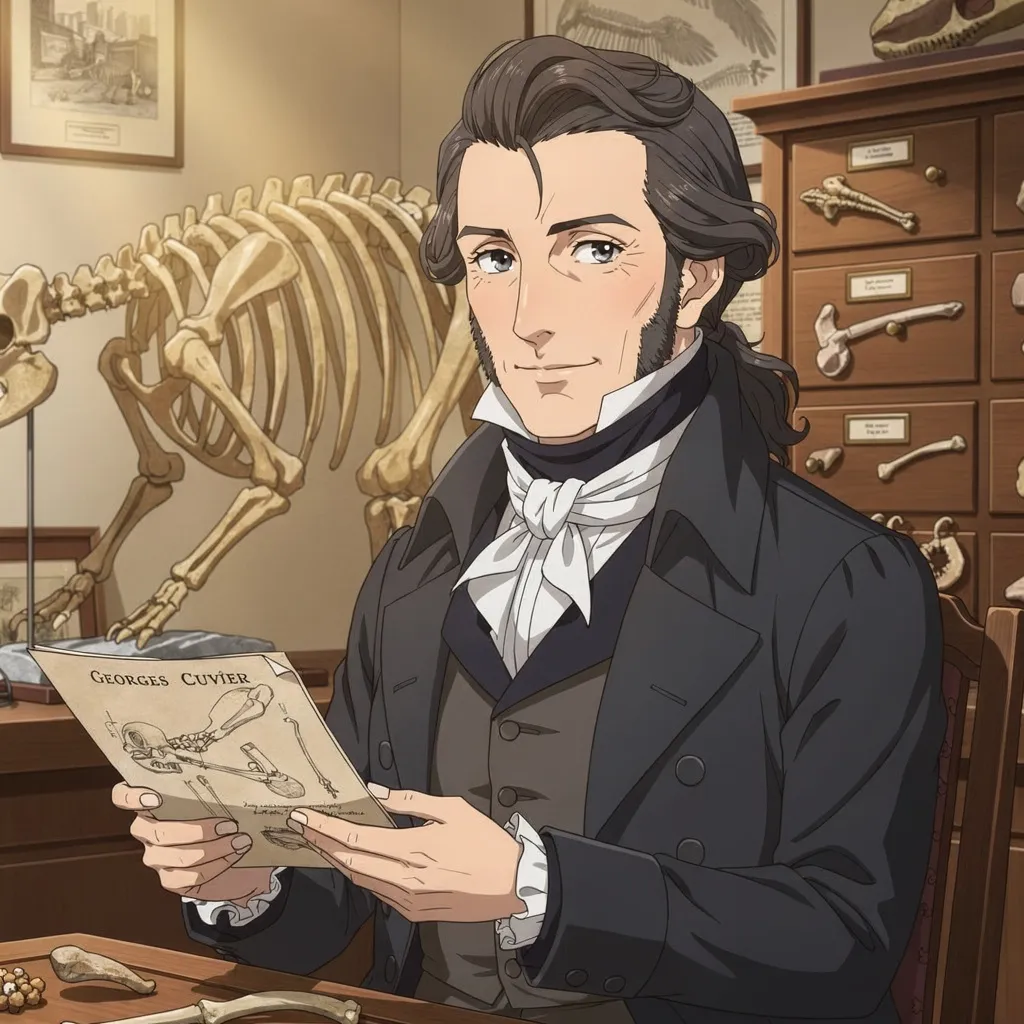
Helping to start the science of paleontology and showing that some animals from the past became extinct.

He came up with the idea of continental drift, which explained that continents move over time.
He was a brilliant scientist who helped us understand space, time, and light.
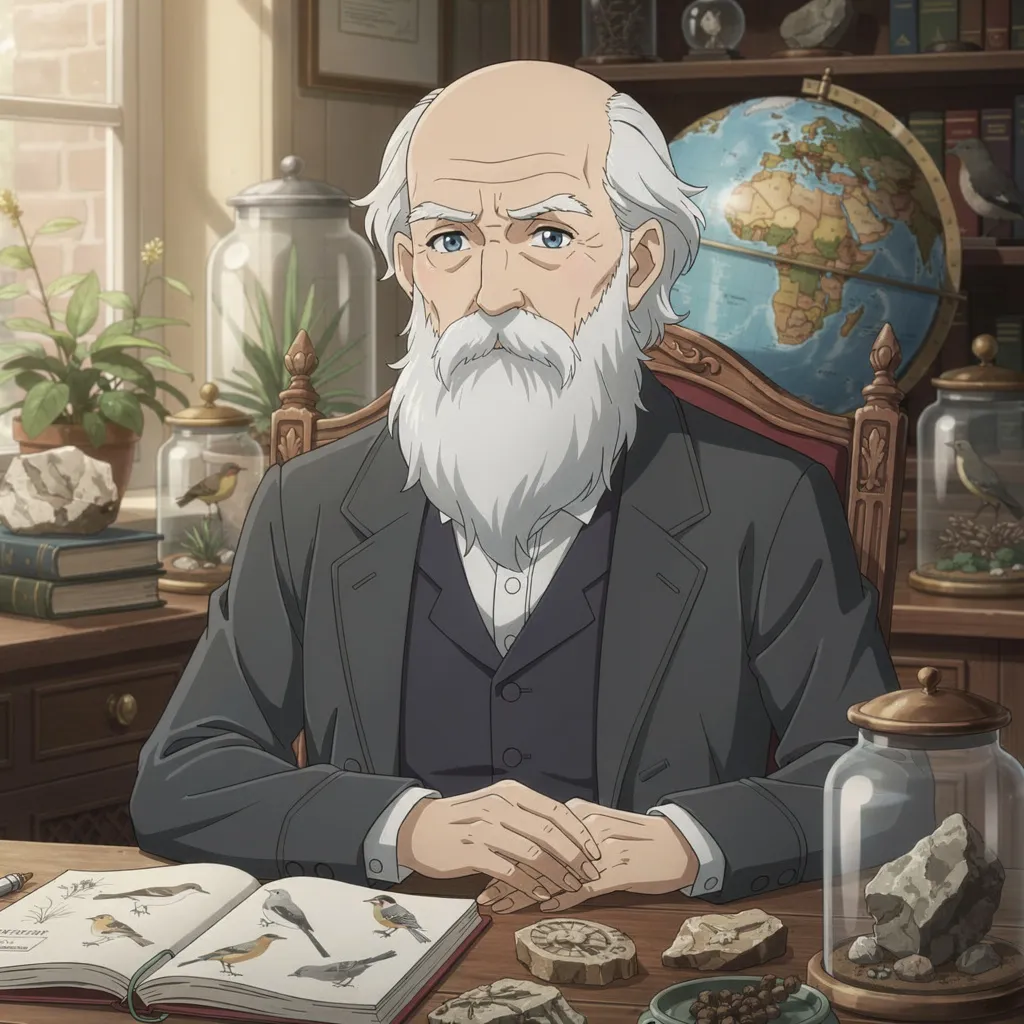
He was a scientist who explained how living things change over time through a process called evolution.
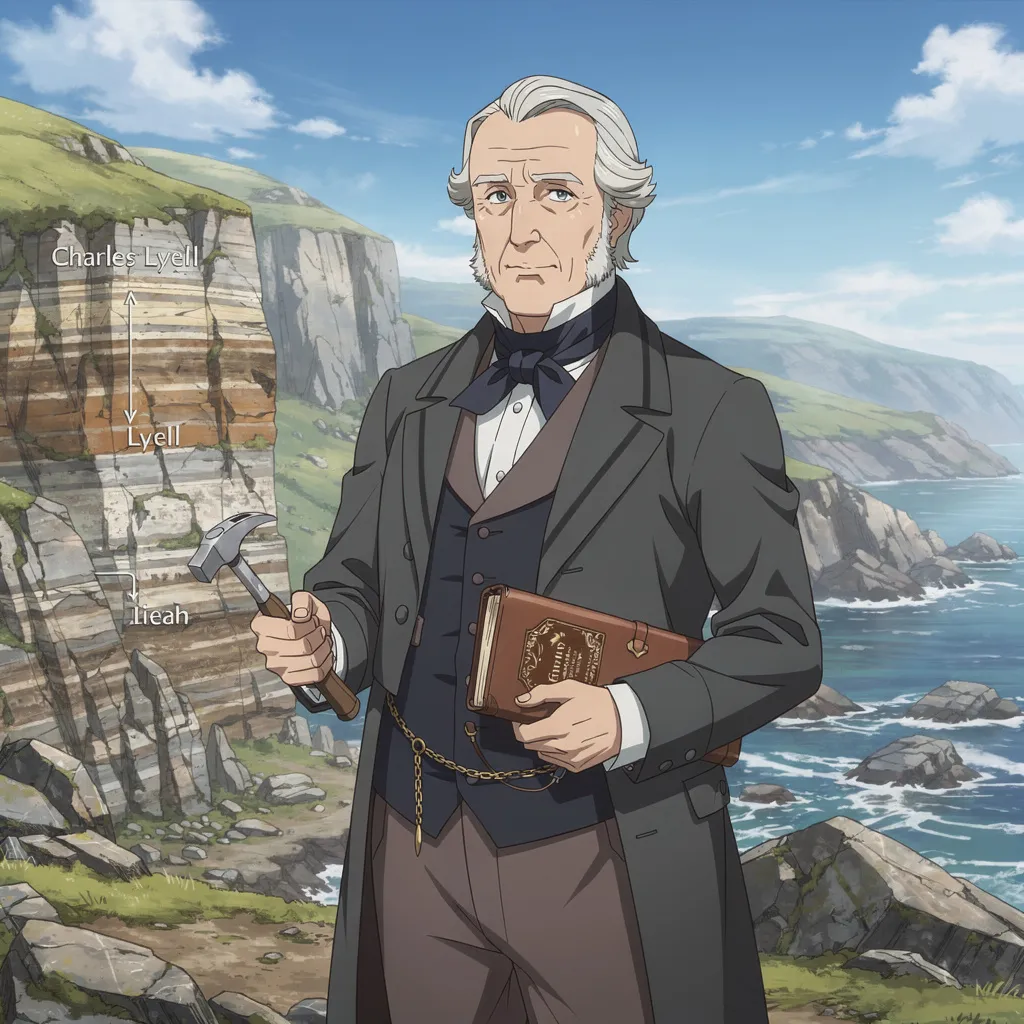
He helped people understand that Earth changes slowly over a very long time.
Explore inspiring lives across science, art, history, music, and more.