
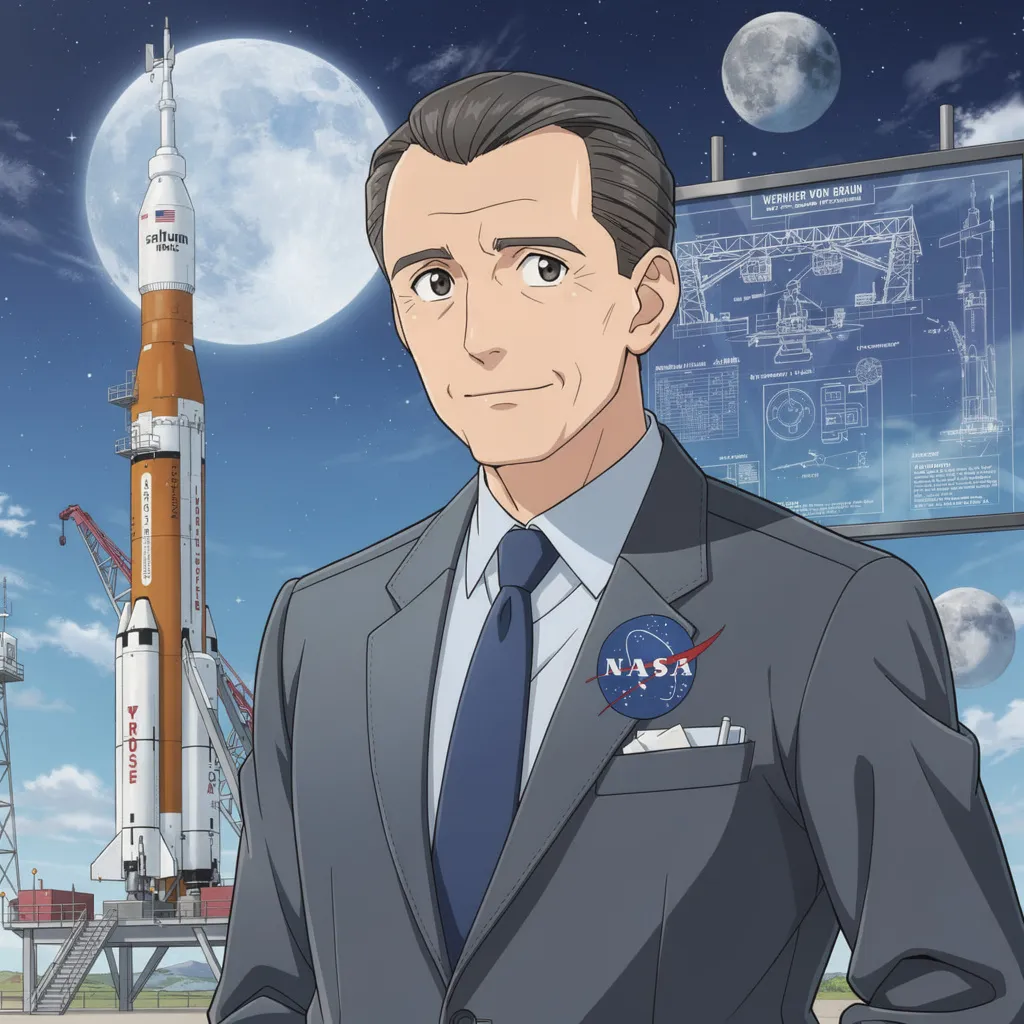
Helping develop powerful rockets that made human space travel and Moon landings possible
Helping develop powerful rockets that made human space travel and Moon landings possible
Wernher von Braun was born in Germany in 1912. As a child, he loved science, math, and stories about space travel.
When he was a boy, he became curious about rockets and dreamed of building machines that could travel beyond Earth. His parents supported his love of learning, and he studied hard in school.
As Wernher grew older, he studied engineering and physics. These subjects helped him understand how rockets could lift off the ground and fly high into the sky.
He spent many years learning how fuel, engines, and motion work together. His big goal was not just to build rockets, but to explore space.
Before coming to the United States, Wernher worked in Germany during World War II, where he helped develop rockets. This time in his life is complicated and is remembered for both scientific progress and serious ethical concerns.
After the war ended, he moved to the United States to continue his work in rocketry.
In the United States, Wernher worked with a group of scientists and engineers who wanted to explore space.
He became an important leader at NASA, the U.S. space agency. His team helped design the Saturn V rocket, one of the most powerful rockets ever built.
The Saturn V rocket was used during the Apollo missions. In 1969, it helped carry astronauts to the Moon for the very first time.
Millions of people around the world watched in excitement as humans walked on the Moon. Wernher’s work helped make this historic moment possible.
Wernher von Braun loved teaching others about space. He wrote books, gave talks, and appeared on TV shows to explain rockets in a simple way.
He wanted kids and adults to imagine a future where people could explore the planets and stars. His excitement for space inspired many young scientists.
Wernher von Braun is remembered as a pioneer of space travel. His ideas and leadership helped begin the Space Age.
Today, scientists and astronauts continue to explore space using ideas that grew from his early work. His dream of reaching the stars still inspires people around the world.
As a kid, Wernher once tried to launch a small rocket from a wagon!
He helped design the Saturn V, which is still one of the tallest rockets ever built.
Wernher loved explaining space ideas using drawings and models.
He believed humans would someday travel to Mars.
Many people call him one of the fathers of modern rocketry.
3 min read · Developing-reader friendly
Think of an answer, then open each card to check.
Helping develop powerful rockets that made human space travel and Moon landings possible
1912-1977
German-American

Helping create electric cars, reusable rockets, and new technology for the future
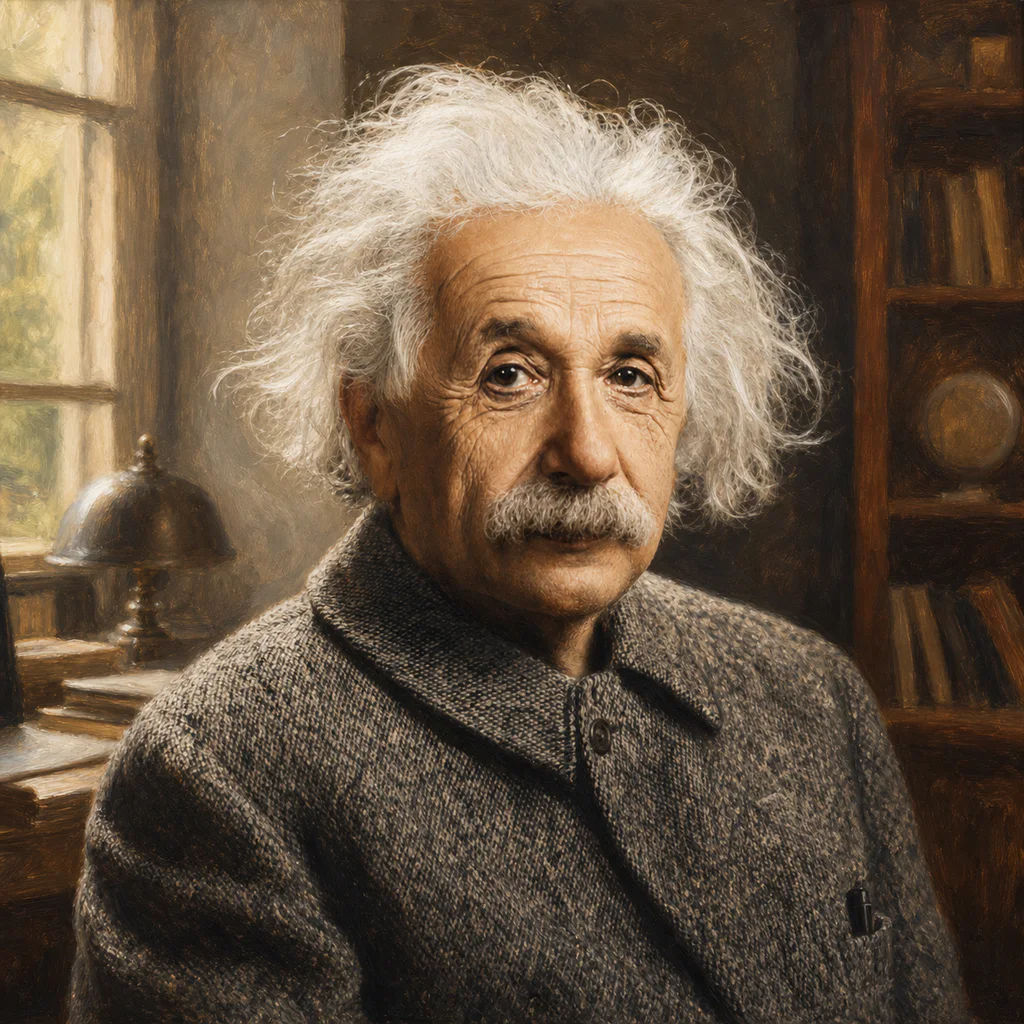
He was a brilliant scientist who helped us understand space, time, and light.

Helping lead a famous science project that changed how people understand atoms and energy

Being the first person to walk on the Moon.
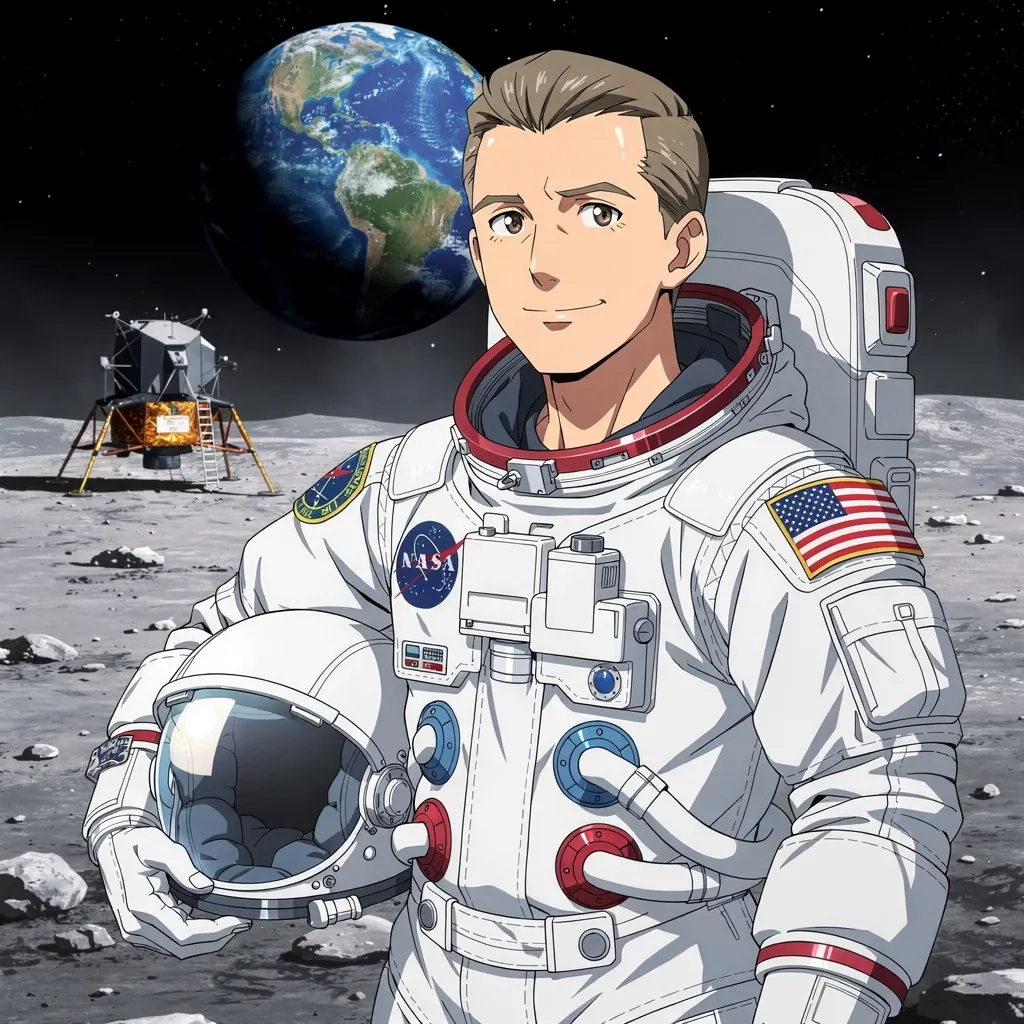
Being one of the first astronauts to walk on the Moon during the Apollo 11 mission.

Helping create quantum mechanics and discovering the Uncertainty Principle
Explore inspiring lives across science, art, history, music, and more.