
Unifying Japan and rising from a poor background to become one of the country’s most powerful leaders
Unifying Japan and rising from a poor background to become one of the country’s most powerful leaders
Toyotomi Hideyoshi was born in 1537 in Owari Province, Japan. Stories about his childhood often describe extreme poverty and a peasant family, but records from his early life are limited and later biographies tried to make his rise seem legendary. What is clear is that he began outside the highest warrior families and entered the service of Oda Nobunaga, an ambitious daimyo who was bringing central Japan under his control.
Hideyoshi proved skilled at logistics, negotiation, castle building, and battle. He rose from a minor follower to one of Nobunaga's leading commanders. When Nobunaga was killed in 1582, Hideyoshi quickly defeated the attacker, Akechi Mitsuhide, and then outmaneuvered rival successors.
Hideyoshi became imperial regent, or kampaku, in 1585 and received the family name Toyotomi. Through campaigns and alliances, he brought the last major independent regions under his authority by 1590. He was not shogun; imperial court titles gave his rule legitimacy even though his power rested on military success.
His government ordered nationwide land surveys that recorded fields and expected harvests. The 1588 sword hunt collected weapons from many farmers, while rules increasingly separated warriors, farmers, artisans, and merchants. These policies reduced some local warfare and made taxes more predictable, but they also fixed people into a stricter social order. Osaka Castle became a center of his government.
Hideyoshi supported grand architecture and the tea ceremony, including spectacular displays organized with tea master Sen no Rikyu. Yet their relationship ended with Hideyoshi ordering Rikyu's death in 1591, a reminder that court culture existed beside authoritarian power.
His policy toward Christianity also hardened. He ordered missionaries to leave in 1587, though enforcement was uneven, and in 1597 his government executed 26 Catholics at Nagasaki.
In 1592, Hideyoshi launched an invasion of Korea as part of a plan to conquer Ming China. A second invasion began in 1597. Korean resistance, Ming forces, supply problems, and naval victories blocked the campaign. The wars devastated Korean communities and caused enormous loss without achieving Hideyoshi's goal.
Hideyoshi died on September 18, 1598, leaving a young son, Hideyori. Japanese forces withdrew from Korea. Within two years Tokugawa Ieyasu won the Battle of Sekigahara, and the Toyotomi family's hold on power faded. Hideyoshi's rise and unification were extraordinary, but an accurate legacy must also include social control, persecution, and costly invasion.
Reliable records of Hideyoshi's childhood are scarce, so many famous origin stories are uncertain.
He received the family name Toyotomi from the imperial court in 1585.
Hideyoshi completed the political unification of Japan in 1590 but never became shogun.
Nationwide land surveys helped his government estimate harvests and taxes.
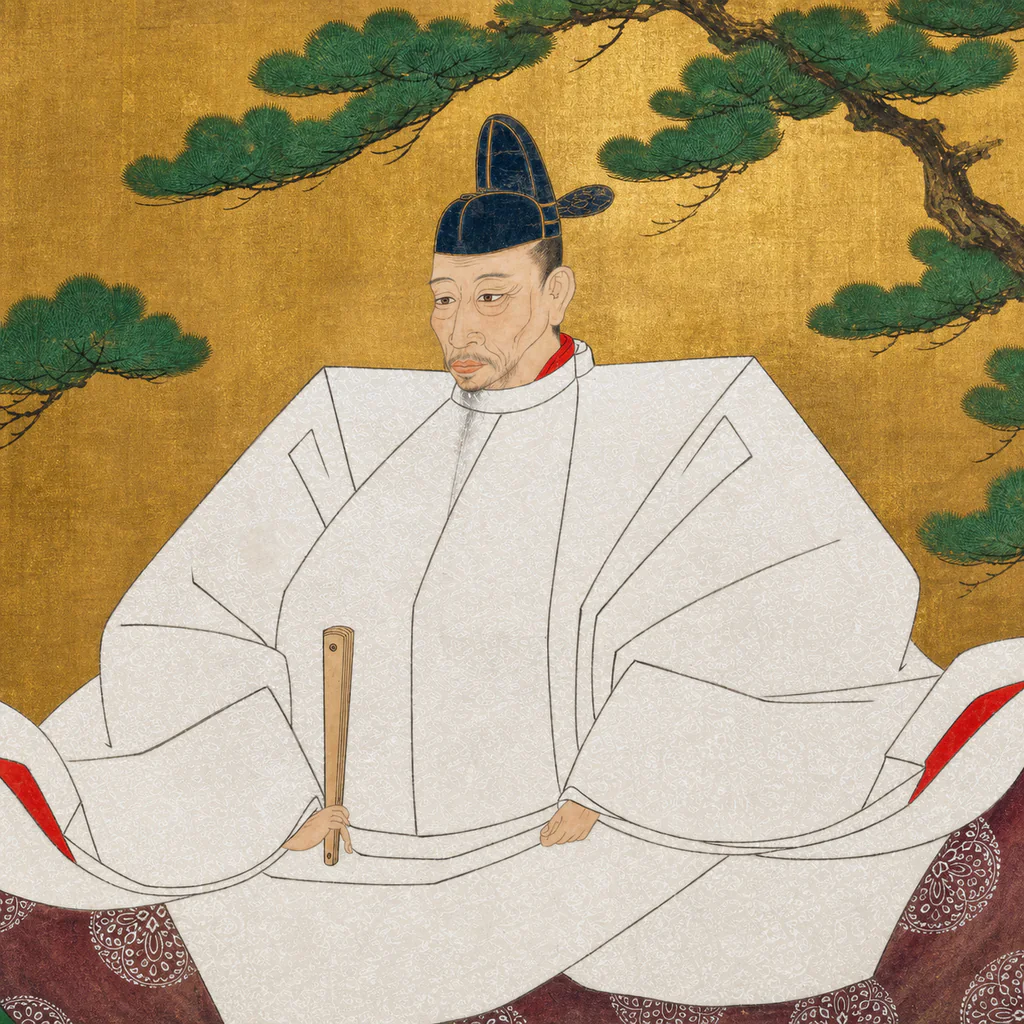
The portrait used for this page's illustration was painted around 1598 by Kano Mitsunobu.
3 min read · Independent-reader guide
Think of an answer, then open each card to check.
Unifying Japan and rising from a poor background to become one of the country’s most powerful leaders
1537-1598
Japanese
Founding the Tokugawa shogunate and bringing long-lasting peace to Japan.
Helping begin the unification of Japan during a time of great change

Being the Emperor of Japan for many years and for his strong interest in science, especially sea life
Leading Japan during a time of big change that helped modernize the country

A famous Japanese samurai who became a wise teacher, artist, and writer.

Founder of Honda Motor Company and a pioneer of cars and motorcycles
Explore inspiring lives across science, art, history, music, and more.