
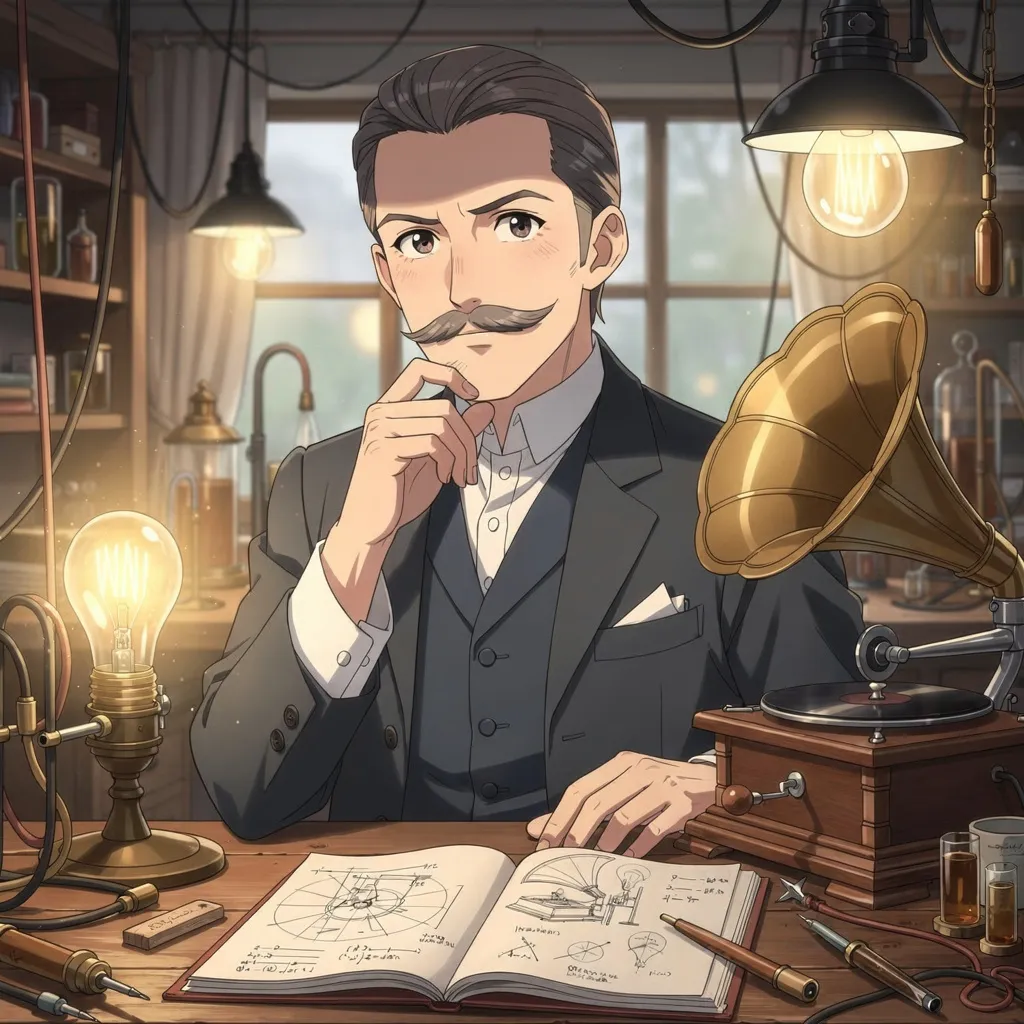
Inventing and improving useful devices like the electric light bulb and the phonograph that changed everyday life
Inventing and improving useful devices like the electric light bulb and the phonograph that changed everyday life
Thomas Edison was born in 1847 in Ohio, USA. When he was a child, he was very curious and loved to ask questions about how things worked. He did not enjoy regular school, so his mother taught him at home.
As a boy, Thomas liked to read science books and do small experiments. He even set up a tiny laboratory in his house. These early experiments helped him learn by trying, failing, and trying again.
Thomas Edison started working at a young age to help his family. He sold newspapers and candy on trains and used his free time to read and experiment. One famous story says he saved a child from a dangerous train track, and the child’s father later taught him about telegraph machines.
This new skill led Thomas to jobs where he could invent and improve machines. He moved to different cities and kept learning. Edison believed that hard work was the key to success.
Thomas Edison held over 1,000 patents for his inventions during his lifetime. One of his most famous achievements was improving the electric light bulb so it was safe, bright, and lasted a long time, making it useful for homes and cities.
He also invented the phonograph, which could record and play sound. People were amazed to hear music and voices come from a machine. Edison helped develop early motion picture technology too, which later became movies.
Edison built a special place called an invention factory, known as his laboratory at Menlo Park, where teams of people worked together to create new ideas. This was very new at the time. Edison believed teamwork could make inventions better and faster.
He often said that mistakes were part of learning. If something did not work, he saw it as one more way not to do it. This positive attitude helped him keep going.
Thomas Edison’s inventions changed how people live, work, and have fun. Electric lights made homes safer and brighter. Recorded sound and movies brought joy to millions of people.
Today, Edison is remembered as one of the greatest inventors in history. His life teaches us to be curious, work hard, and never give up on our ideas.
Thomas Edison held more than 1,000 patents for his inventions.
He was partly deaf, but he said this helped him concentrate.
Edison loved to work late at night and sometimes slept in his lab.
He once said that genius is 1% inspiration and 99% hard work.
3 min read · Developing-reader friendly
Open a word for a short explanation.
A new device, method, or idea that someone creates.
Think of an answer, then open each card to check.
Inventing and improving useful devices like the electric light bulb and the phonograph that changed everyday life
1847-1931
American
He helped create the system of alternating current (AC) electricity that powers homes and cities.
A famous American inventor, writer, and leader who helped shape the United States.

Helping create electric cars, reusable rockets, and new technology for the future

Helping create Apple and changing the way people use computers, phones, and music
Making cars affordable for everyday people by improving the moving assembly line.
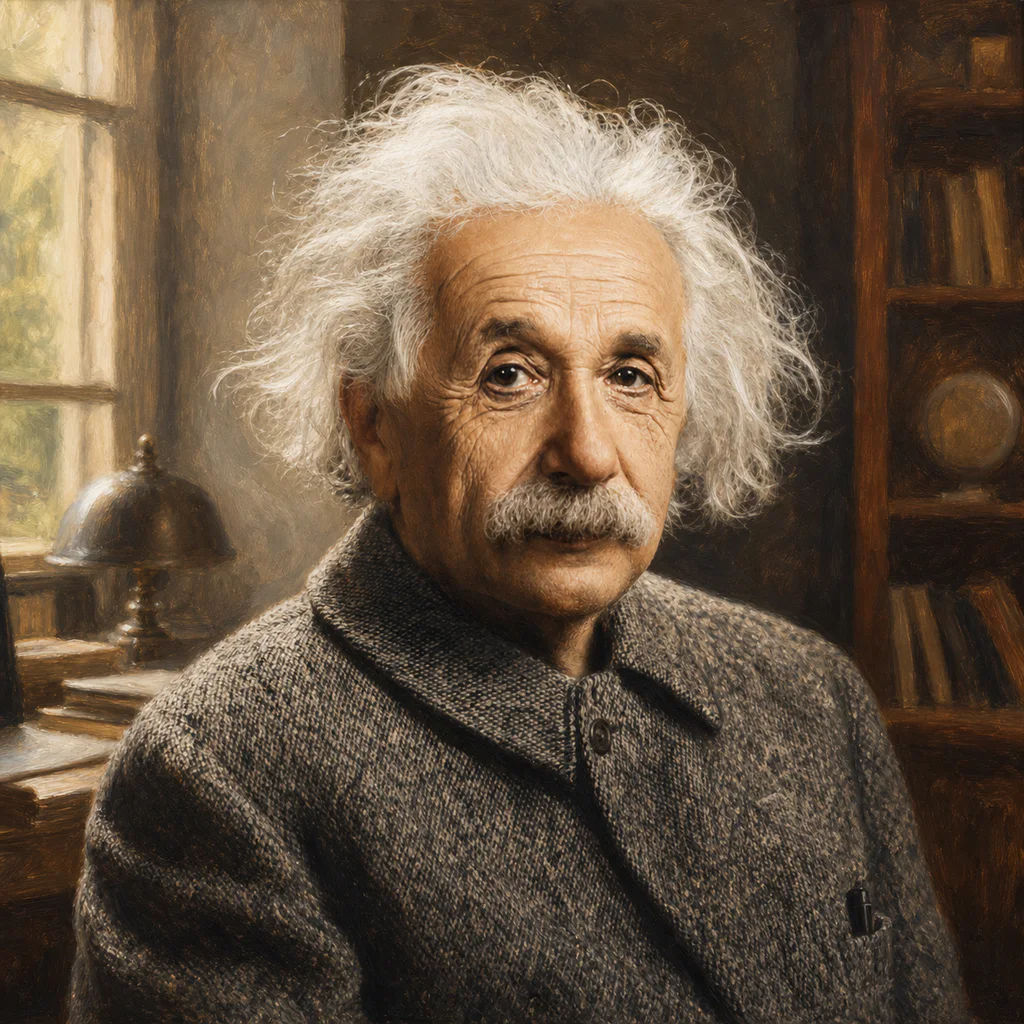
He was a brilliant scientist who helped us understand space, time, and light.
Explore inspiring lives across science, art, history, music, and more.