
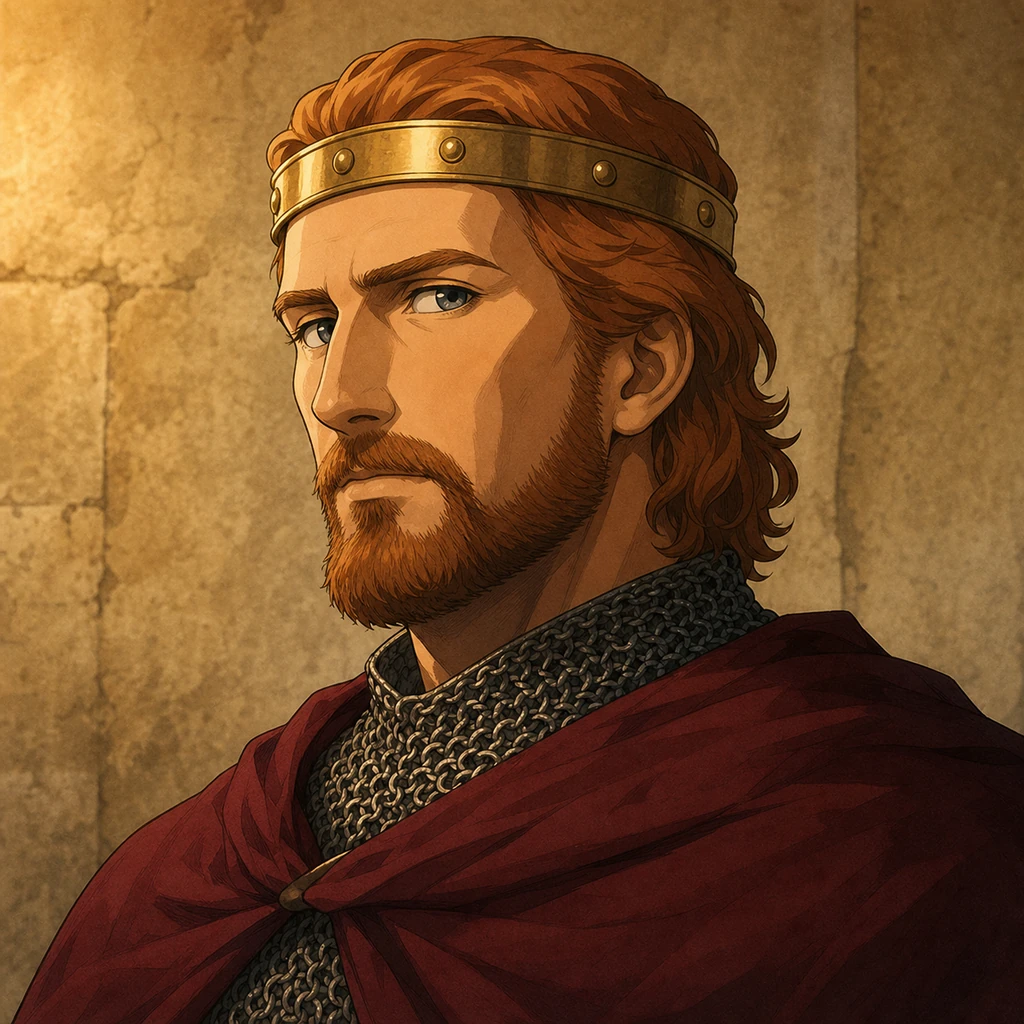
Biography for young readers
Richard the Lionheart
Being a brave King of England known for his courage and leadership
- Lived
- 1157-1199
- From
- English
- Reading time
- About 4 min
- Reading guide
- Independent-reader guide
Watch Richard the Lionheart's story unfold
Why this story matters
A life worth remembering
Being a brave King of England known for his courage and leadership
Think about it
What did you notice?
- Which moment changed the direction of this person's life?
- Which achievement or idea do you think mattered most?
- What is one question you would ask them?
Prefer to read? Open the complete biography transcript
A Prince of Many Lands
Richard I was born at Oxford on September 8, 1157, but the kingdom he would inherit stretched far beyond England. His parents, King Henry II and Eleanor of Aquitaine, ruled lands from the Scottish border deep into what is now France. Richard grew up mainly in those French-speaking territories. He learned the skills expected of a medieval noble and also composed poetry in French and Occitan.
Family politics shaped his youth. In 1173, still a teenager, Richard joined two brothers in a rebellion against their father. The revolt failed, and Richard submitted to Henry. He later governed Aquitaine and became known as an energetic but sometimes harsh military commander. When his older surviving brothers died, Richard became heir. He again fought Henry in 1189, this time alongside King Philip II of France, and took the English crown after Henry's death.
A Crown and a Crusade
Richard was crowned on September 3, 1189. Violence against Jewish people broke out around the coronation and spread to other towns; in 1190, York's Jewish community was massacred. Richard did not order those attacks, but royal protection failed during a dangerous wave of prejudice tied partly to crusading excitement and debt.
The new king quickly raised money and left for the Third Crusade, a Christian military campaign against Muslim forces in the eastern Mediterranean. He captured Cyprus in 1191, helped take Acre, and defeated Saladin's army at Arsuf. Richard also ordered the killing of thousands of Muslim prisoners after Acre, an act that shows why the admired warrior image is only part of his story. The crusaders did not recapture Jerusalem. In 1192, Richard and Saladin agreed to a truce that left Jerusalem under Muslim rule while allowing Christian pilgrims to visit.
A Captive King Returns
On his journey home, Richard was captured in December 1192 and eventually handed to Holy Roman Emperor Henry VI. His release required a huge ransom of 150,000 marks of silver, raised across his lands through taxes and collections. Richard returned to England in 1194, was crowned again at Winchester, and soon crossed the Channel.
For the rest of his reign, he defended the family's continental territories against Philip II. Richard relied on officials to govern England while he was away and spent only about six months of his ten-year reign there. He also built Château Gaillard above the River Seine as a powerful fortress protecting Normandy. These campaigns held much of his inheritance together, but their taxes and costs placed heavy pressure on the people who paid them.
Beyond the Lionheart Legend
In March 1199, Richard was struck by a crossbow bolt while besieging Châlus in Aquitaine. The wound became infected, and he died on April 6 at age 41. He had no legitimate children, so his younger brother John became king.
Later stories turned Richard into a nearly perfect knight, yet the historical record is more complicated. He was a skilled commander, negotiator, poet, and ruler of an international collection of lands. He was also a king whose wars caused suffering and whose long absences made other people run England. Studying both the achievements and the harm helps explain why Richard remains memorable: his life connects royal family conflict, the Crusades, taxation, government, and the way legends can simplify real people.
Did you know?
Fun facts about Richard the Lionheart
-
Richard I was born in Oxford on September 8, 1157.
-
He composed poetry in both French and Occitan.
-
Richard spent only about six months of his ten-year reign in England.
-
His release from captivity required a ransom of 150,000 marks of silver.
-
He died in 1199 after being wounded by a crossbow bolt during the siege of Châlus.
Learn & remember
Make the story yours
4 min read · Independent-reader guide
Three things to remember
- Known for: Being a brave King of England known for his courage and leadership
- Lived: 1157-1199
- From: English
Quick check
What do you remember?
Think of an answer, then open each card to check.
What is Richard the Lionheart best known for?
Being a brave King of England known for his courage and leadership
When did Richard the Lionheart live?
1157-1199
What place or nationality is connected to this story?
English
Biography
King Henry VIII
Being the King of England who loved learning, music, and made big changes to his country.
Biography
William the Conqueror
Becoming the first Norman King of England and changing English history forever

Biography
Christopher Lee
A famous actor known for playing powerful characters in movies like Dracula, Star Wars, and The Lord of the Rings.
Biography
Charlemagne
A great king who united much of Europe and helped learning and culture grow.
One story at a time
Who will you discover next?
Explore inspiring lives across science, art, history, music, and more.