
Biography for young readers
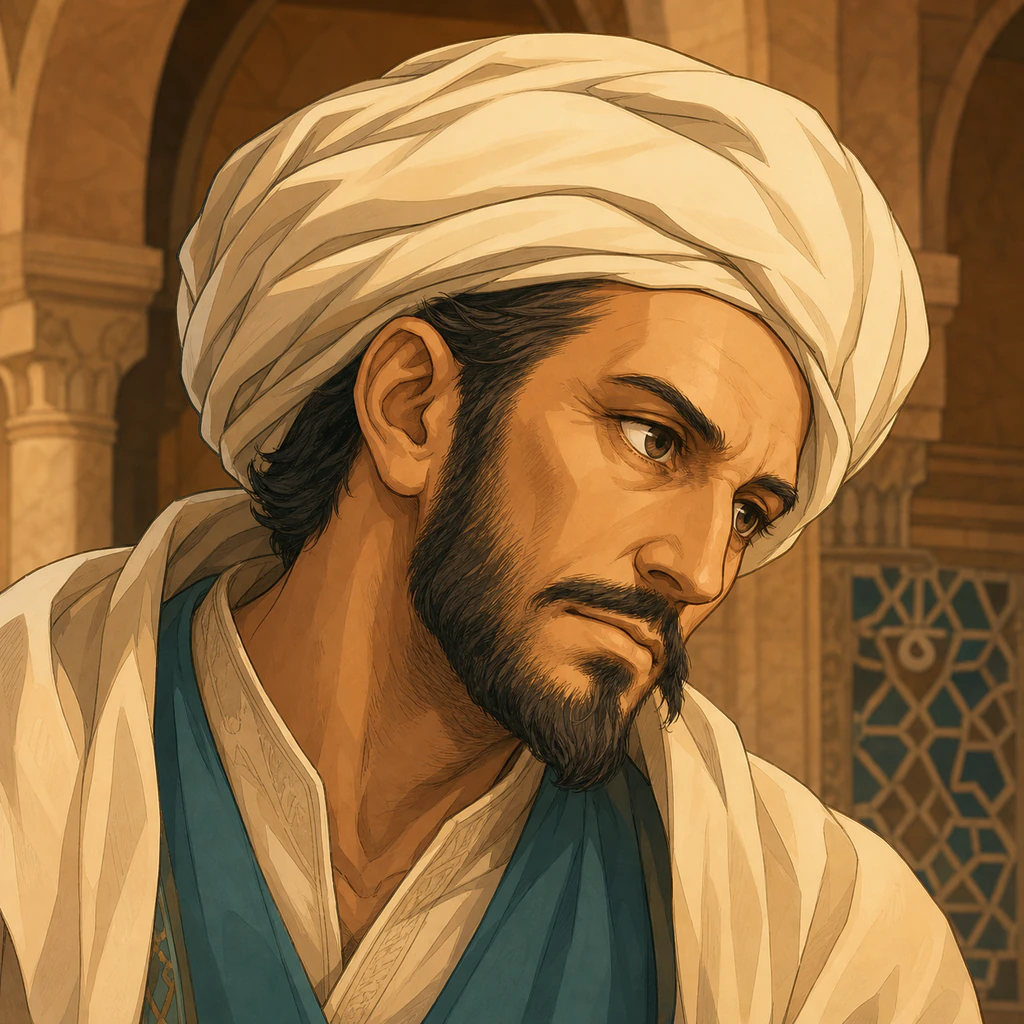
Averroes (Ibn Rushd)
A famous philosopher and doctor who helped people understand science and the ideas of ancient Greece
- Lived
- 1126-1198
- From
- Andalusian Muslim (from Al-Andalus, in present-day Spain)
- Reading time
- About 3 min
- Reading guide
- Advanced vocabulary
Watch Averroes (Ibn Rushd)'s story unfold
Why this story matters
A life worth remembering
A famous philosopher and doctor who helped people understand science and the ideas of ancient Greece
Think about it
What did you notice?
- Which moment changed the direction of this person's life?
- Which achievement or idea do you think mattered most?
- What is one question you would ask them?
Prefer to read? Open the complete biography transcript
A Scholar Grows Up in Córdoba
In 1126, in the busy Andalusian city of Córdoba, a child was born who would become a judge, doctor, philosopher, and student of the stars. His name was Abū al-Walīd Muhammad ibn Ahmad Ibn Rushd, although Latin readers later called him Averroes.
Ibn Rushd belonged to a respected family of Muslim legal scholars: both his father and his grandfather served as judges. He did not leave an autobiography, so parts of his childhood remain unknown, but historical records show that he studied Islamic law and religious sciences as well as medicine, philosophy, and astronomy.
Judge, Doctor, and Observer
By 1153, Ibn Rushd was in Marrakesh, where he recorded observations of stars and thought about how the heavens moved. He later served as a judge in Seville in 1169 and Córdoba in 1171, work that required him to study evidence, laws, and disagreements carefully.
Around this period, the philosopher Ibn Tufayl introduced him to the Almohad caliph Abū Yaʿqūb Yūsuf. The ruler asked Ibn Rushd to make Aristotle's difficult works more accessible, and Ibn Rushd eventually became both chief judge of Córdoba and the caliph's physician in 1182.
Explaining Philosophy and Medicine
For about three decades, Ibn Rushd wrote short, middle, and detailed commentaries on nearly all the works of Aristotle available to him. He did more than repeat an ancient thinker: he compared arguments, corrected interpretations he thought were mistaken, and developed ideas that later reached readers through Arabic, Hebrew, and Latin manuscripts.
His Kulliyyāt fī al-ṭibb, a book about general principles of medicine, became known in Latin as the Colliget. In the Decisive Treatise, he argued that careful philosophical reasoning and Islamic religious law could work together, while his astronomy questioned parts of Ptolemy's system even though it kept the Earth-centered model accepted in his time.
Exile, Return, and a Lasting Conversation
In 1195, Ibn Rushd fell out of favor with the Almohad court for reasons historians still debate, and he was exiled to Lucena near Córdoba. He was rehabilitated before his death, returned to Marrakesh, and died there on December 10, 1198.
Many of his Arabic texts later disappeared, but Hebrew and Latin translations preserved important parts of his work. Medieval European scholars called him “the Commentator” because his explanations of Aristotle were so influential, yet his wider contribution reached law, medicine, astronomy, and Muslim, Jewish, and Christian philosophy. Ibn Rushd's story shows how one person's patient effort to examine hard questions can keep a conversation moving across languages, cultures, and centuries.
Did you know?
Fun facts about Averroes (Ibn Rushd)
-
Ibn Rushd was called al-Ḥafīd, meaning “the grandson,” to distinguish him from his grandfather, who had the same name.
-
In 1153, Ibn Rushd recorded observations of stars while he was in Marrakesh.
-
He wrote short, middle, and long explanations of Aristotle's works.
-
His medical book Kulliyyāt fī al-ṭibb became known in Latin as the Colliget.
-
Latin scholars often called Aristotle “the Philosopher” and Ibn Rushd “the Commentator.”
Learn & remember
Make the story yours
3 min read · Advanced vocabulary
Three things to remember
- Known for: A famous philosopher and doctor who helped people understand science and the ideas of ancient Greece
- Lived: 1126-1198
- From: Andalusian Muslim (from Al-Andalus, in present-day Spain)
Words to know
Open a word for a short explanation.
astronomy
The scientific study of space, stars, planets, and the universe.
evidence
Information used to support or test an idea.
philosophy
The study of big questions about knowledge, values, and existence.
Quick check
What do you remember?
Think of an answer, then open each card to check.
What is Averroes (Ibn Rushd) best known for?
A famous philosopher and doctor who helped people understand science and the ideas of ancient Greece
When did Averroes (Ibn Rushd) live?
1126-1198
What place or nationality is connected to this story?
Andalusian Muslim (from Al-Andalus, in present-day Spain)

Biography
Ibn Sina (Avicenna)
A brilliant doctor and thinker who wrote famous books about medicine and science.
Biography
Aristotle
Being one of the greatest thinkers in history and teaching people how to learn through careful thinking and observation.

Biography
Maimonides
A famous Jewish scholar who wrote important books about law, philosophy, and medicine.

Biography
Saint Augustine
A famous Christian thinker and writer who helped shape Christian ideas and learning.

Biography
Thomas Aquinas
A famous thinker who helped explain big ideas about faith and reason.
Biography
Socrates
Being a famous ancient philosopher who taught people to think deeply by asking smart questions
One story at a time
Who will you discover next?
Explore inspiring lives across science, art, history, music, and more.