
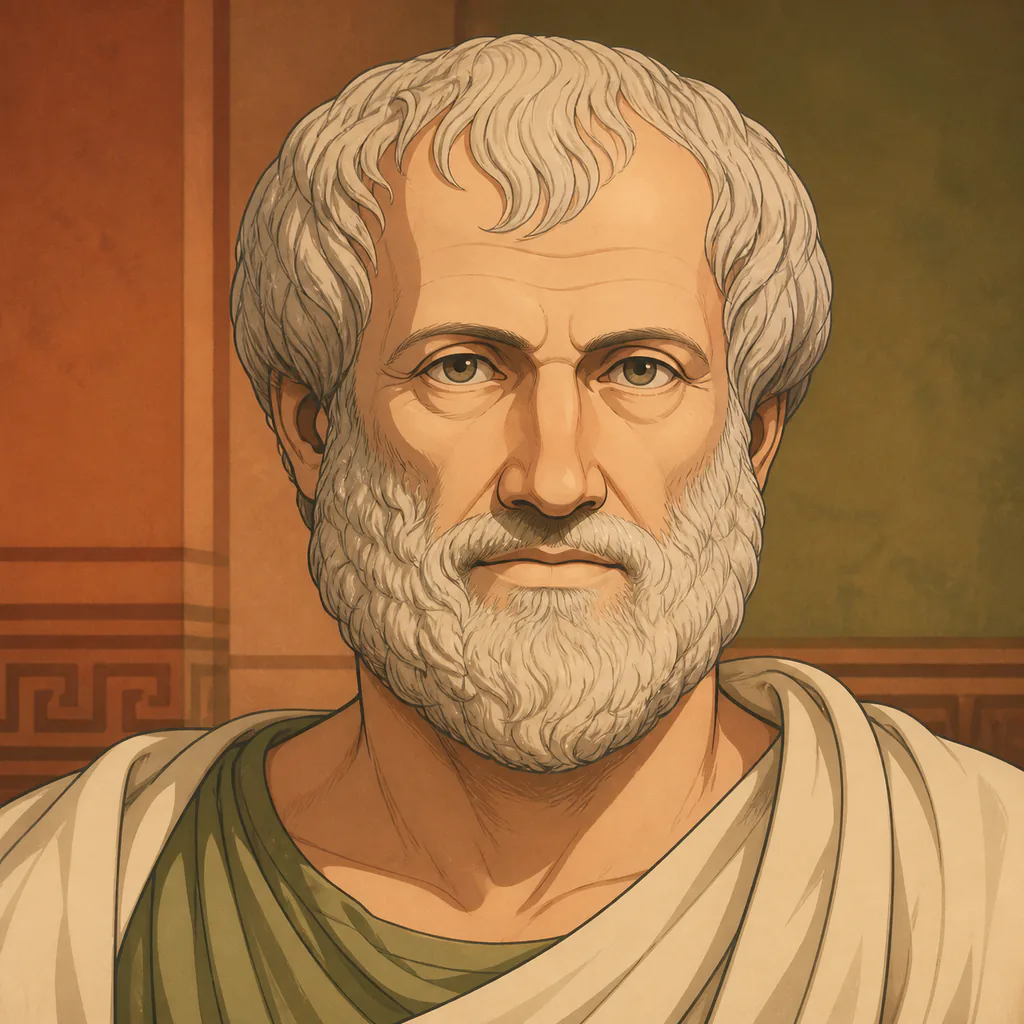
Biography for young readers
Aristotle
Being one of the greatest thinkers in history and teaching people how to learn through careful thinking and observation.
- Lived
- 384 BC – 322 BC
- From
- Greek
- Reading time
- About 3 min
- Reading guide
- Independent-reader guide
Watch Aristotle's story unfold
Why this story matters
A life worth remembering
Being one of the greatest thinkers in history and teaching people how to learn through careful thinking and observation.
Think about it
What did you notice?
- Which moment changed the direction of this person's life?
- Which achievement or idea do you think mattered most?
- What is one question you would ask them?
Prefer to read? Open the complete biography transcript
From Stagira to Plato's Academy
More than 2,300 years ago, Aristotle tried to organize big questions about nature, reasoning, art, and living well. He was born in 384 BCE in Stagira, a Greek city in the Macedonian region. At about seventeen, he went to Athens and spent roughly twenty years studying in Plato's Academy.
The details of Aristotle's life come from ancient reports written after his time, so historians treat some stories cautiously. The broad outline is well supported: after Plato died in 347 BCE, Aristotle left Athens and worked with other thinkers in Assos, on the coast of present-day Türkiye. He later moved to the island of Lesbos, where the sea and its varied animals became part of his research.
Learning by Studying Living Things
On Lesbos, Aristotle worked with the thinker Theophrastus and investigated animals in a more organized way than earlier surviving writers had done. He compared body parts, behavior, and reproduction, then tried to explain the patterns he observed. His biological writings became the first surviving study of animals with such wide scope.
Observation was only one part of his method. Aristotle also asked what caused something to happen and how a strong explanation should be built. Some of his conclusions were remarkably careful, while others were mistaken because he lacked modern instruments and experiments. Learning from him today means studying both the power and the limits of early scientific reasoning.
A Royal Student and a New School
In 343 BCE, King Philip II of Macedon asked Aristotle to tutor his teenage son Alexander, the future Alexander the Great. Some teaching probably happened, but scholars do not know enough to credit Aristotle for Alexander's later decisions. Archaeologists connect their lessons with the gymnasium at ancient Mieza.
By 335 BCE, Aristotle was back in Athens. He established a school at a public exercise ground called the Lyceum and worked there with Theophrastus and many students. The group collected manuscripts and investigated subjects ranging from animals and logic to government, poetry, and theater. The word Peripatetic, later used for Aristotle's followers, was probably connected to a covered walkway at the site.
Ideas, Limits, and a Long Legacy
Aristotle's surviving works ask how arguments fit together, how communities should be organized, and how people can build good character through practice. In the Nicomachean Ethics, he explored human flourishing rather than treating a good life as one lucky moment. His writings on logic gave later scholars a system for testing how conclusions follow from starting claims.
His record is also complicated. Aristotle defended slavery and unequal political roles, ideas that denied many people freedom and citizenship. Readers now examine those errors instead of treating an ancient author as a final authority.
After Alexander died in 323 BCE, anti-Macedonian feeling rose in Athens, and Aristotle left for Chalcis, where he died in 322 BCE. His texts traveled through centuries of editing, translation, debate, and rediscovery. His wider contribution was not a set of perfect answers, but an unusually broad attempt to connect careful observation, clear reasoning, and questions about how humans should live.
Did you know?
Fun facts about Aristotle
-
Aristotle moved to Athens at about age seventeen and studied in Plato's Academy for roughly twenty years.
-
His surviving zoological writings make up about one quarter of the works attributed to him that remain today.
-
The Lyceum took its name from a public exercise area dedicated to Apollo Lykeios.
-
Aristotle's school investigated subjects as different as animals, logic, music, government, poetry, and theater.
-
Ancient and medieval editors, translators, and commentators helped preserve and spread his works.
Learn & remember
Make the story yours
3 min read · Independent-reader guide
Three things to remember
- Known for: Being one of the greatest thinkers in history and teaching people how to learn through careful thinking and observation.
- Lived: 384 BC – 322 BC
- From: Greek
Words to know
Open a word for a short explanation.
citizenship
Legal membership in a country, with its rights and responsibilities.
Quick check
What do you remember?
Think of an answer, then open each card to check.
What is Aristotle best known for?
Being one of the greatest thinkers in history and teaching people how to learn through careful thinking and observation.
When did Aristotle live?
384 BC – 322 BC
What place or nationality is connected to this story?
Greek
Biography
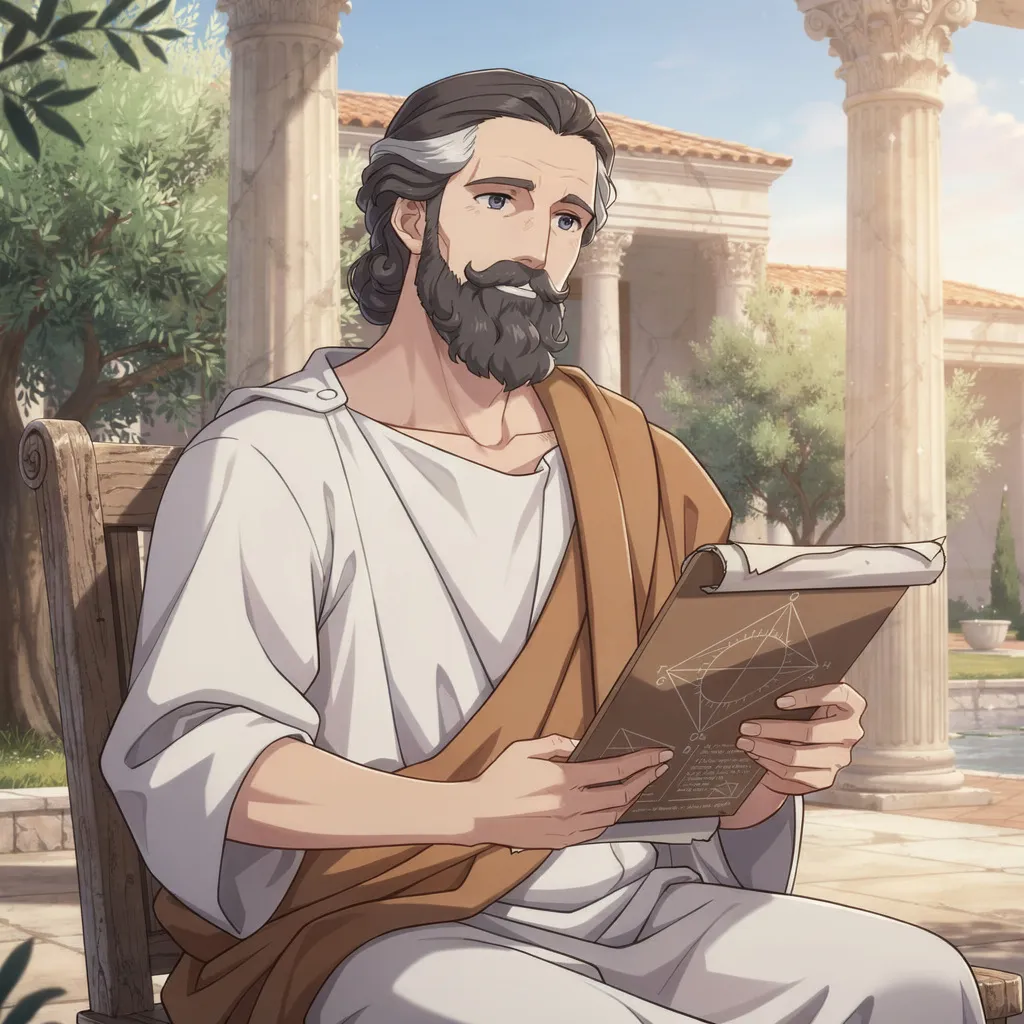
Plato
A famous ancient Greek philosopher who started one of the first schools and wrote about big ideas.
Biography
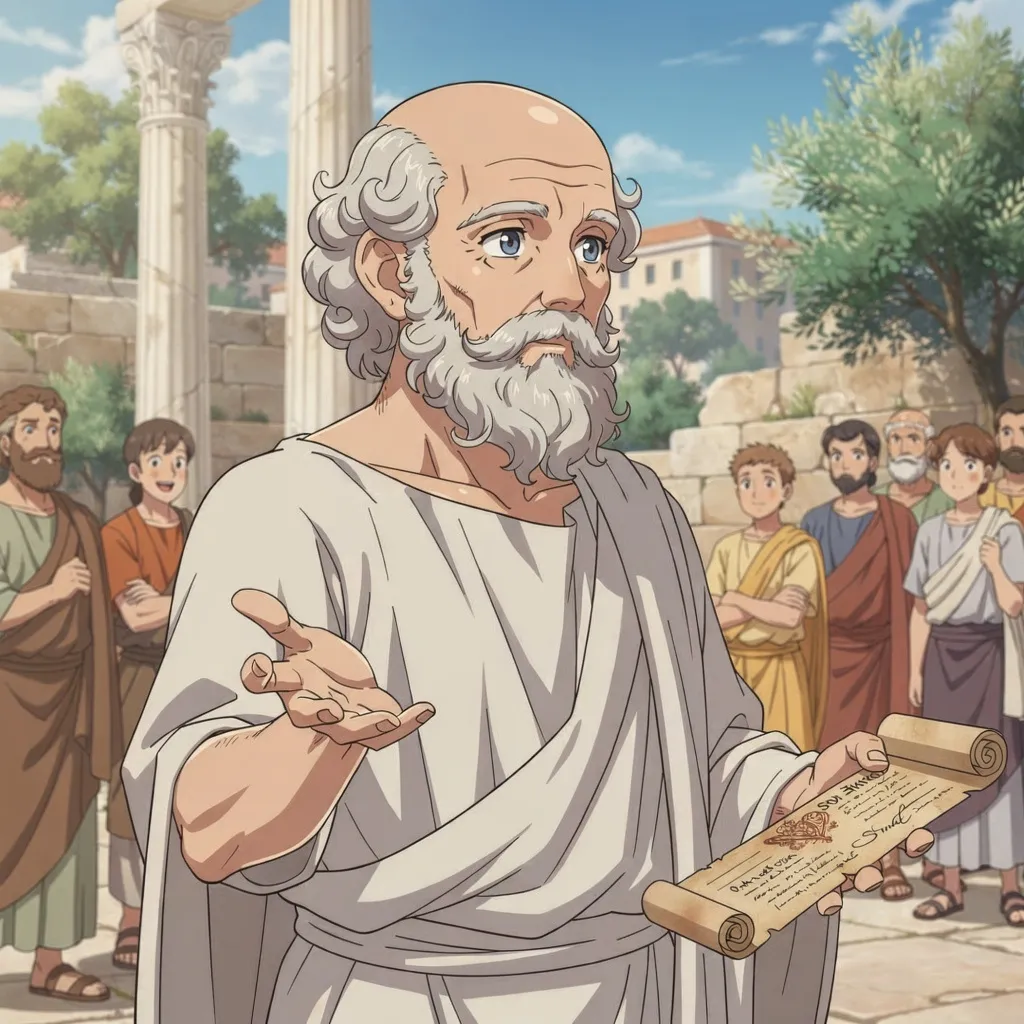
Socrates
Being a famous ancient philosopher who taught people to think deeply by asking smart questions

Biography
Thomas Aquinas
A famous thinker who helped explain big ideas about faith and reason.

Biography
Confucius
A famous Chinese teacher and philosopher who shared ideas about kindness, respect, and good behavior
Biography
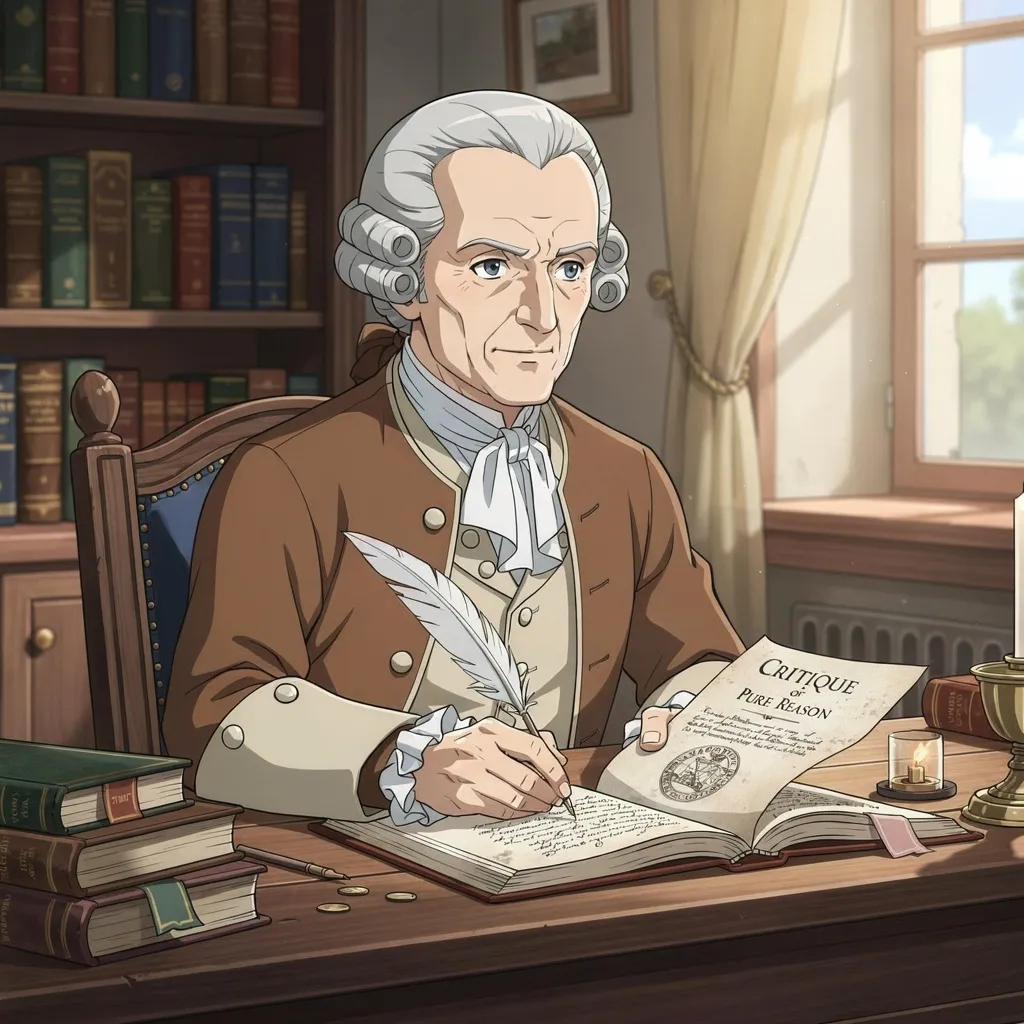
Immanuel Kant
Helping people think carefully about right and wrong, knowledge, and how we understand the world
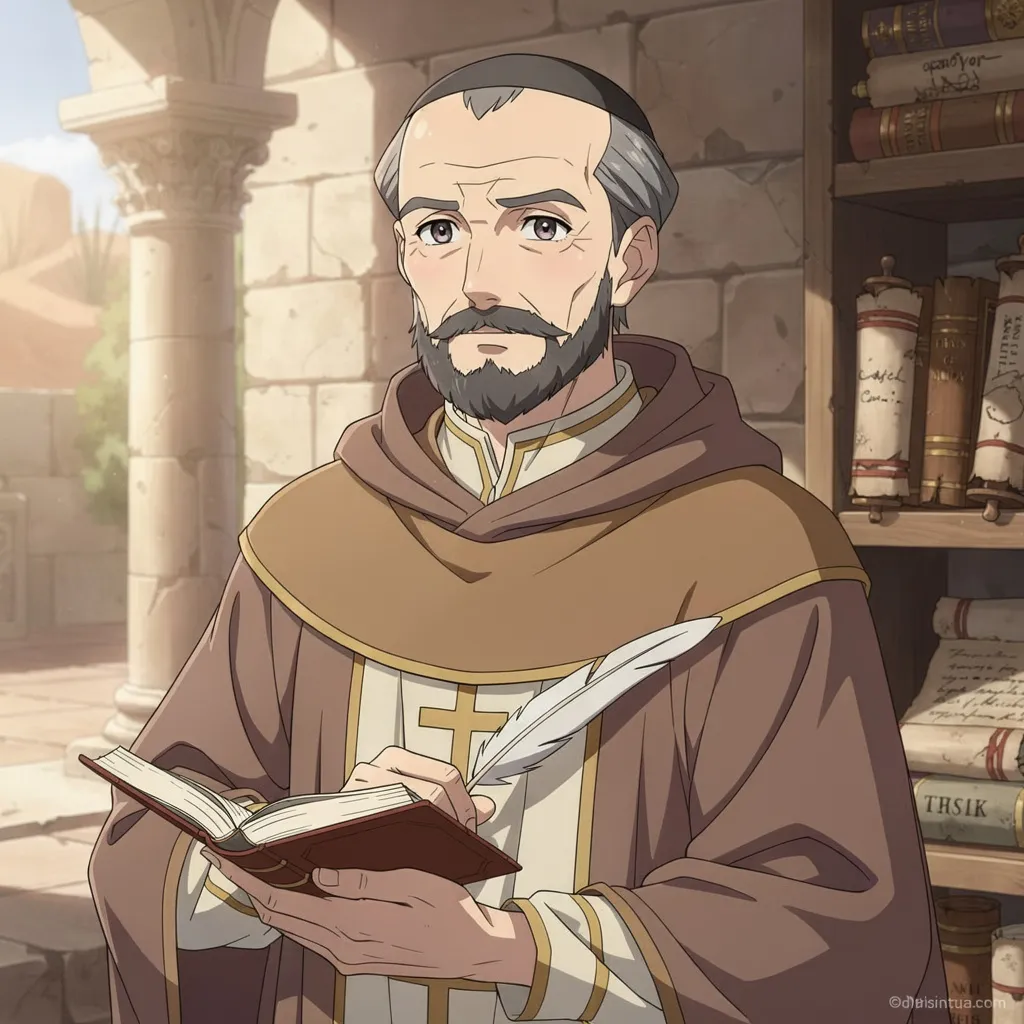
Biography
Saint Augustine
A famous Christian thinker and writer who helped shape Christian ideas and learning.
One story at a time
Who will you discover next?
Explore inspiring lives across science, art, history, music, and more.