
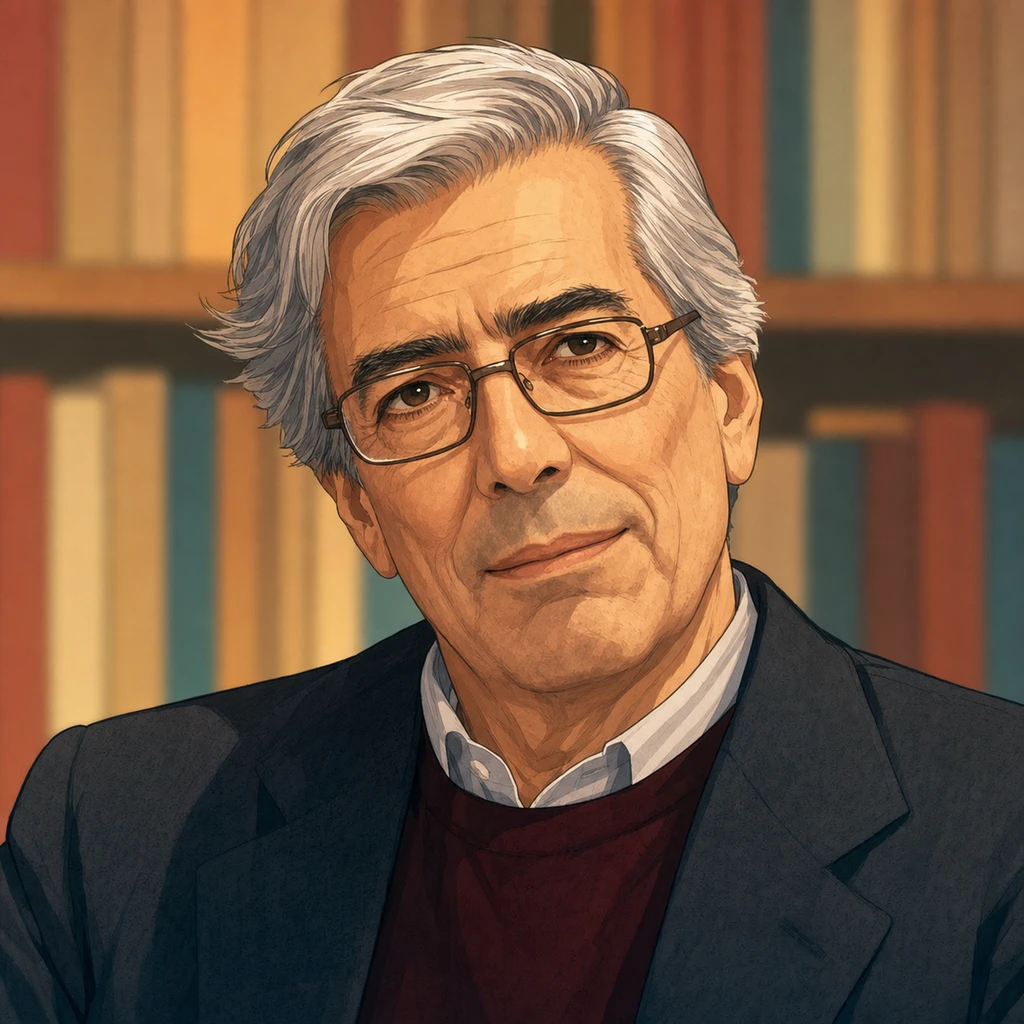
Biography for young readers
Mario Vargas Llosa
A famous writer who won the Nobel Prize in Literature for his powerful and imaginative books.
- Lived
- 1936-present
- From
- Peruvian
- Reading time
- About 4 min
- Reading guide
- Advanced vocabulary
Watch Mario Vargas Llosa's story unfold
Why this story matters
A life worth remembering
A famous writer who won the Nobel Prize in Literature for his powerful and imaginative books.
Think about it
What did you notice?
- Which moment changed the direction of this person's life?
- Which achievement or idea do you think mattered most?
- What is one question you would ask them?
Prefer to read? Open the complete biography transcript
A Young Reporter With a Play on Stage
At 16, Mario Vargas Llosa was already writing for local newspapers in Piura, Peru, and helping stage his play The Flight of the Inca. He was born in Arequipa on March 28, 1936, and spent parts of childhood in Cochabamba, Bolivia, and the Peruvian cities of Piura and Lima. He grew up with his mother and her family, believing his father had died, until his parents reunited when Mario was ten.
His father later sent him to Lima's Leoncio Prado Military Academy. Its rigid rules, violence, and sharp social divisions were painful, but the experience eventually supplied material for his first novel. After leaving the academy, Vargas Llosa finished school in Piura and kept choosing writing assignments whenever he could.
Study, Paris, and Breakthrough Novels
In 1953, Vargas Llosa began studying literature and law at the National University of San Marcos in Lima. He earned a literature degree in 1958, received a scholarship for graduate study in Madrid, and moved to Paris in 1959. There he taught languages and worked in journalism while building his career sentence by sentence.
His first story collection, The Leaders, appeared in 1959. The Time of the Hero, published in 1963, turned his military-school memories into a challenging novel about authority and abuse. Military leaders condemned the book, and copies were publicly burned at his former school. The Green House and Conversation in the Cathedral followed, placing him at the center of the Latin American Boom, a period when daring novels from the region reached readers worldwide.
Literature, Public Debate, and Politics
Vargas Llosa wrote novels, plays, essays, criticism, memoir, and newspaper columns. Books such as The War of the End of the World and The Feast of the Goat examined how political power, fear, and resistance shape ordinary lives. His storytelling moved among different times and viewpoints, asking readers to notice that one event can look very different depending on who tells it.
He served as president of PEN International from 1976 to 1979. In 1990, he ran for president of Peru and lost the runoff election to Alberto Fujimori. Vargas Llosa's political positions changed over the decades and often prompted disagreement; his public arguments are part of his history, while his fiction remains open to many interpretations. He became a Spanish citizen in 1993, joined the Royal Spanish Academy in the 1990s, and received the Cervantes Prize in 1994.
A Nobel Prize and a Worldwide Legacy
In 2010, Vargas Llosa received the Nobel Prize in Literature. The award recognized the way his writing mapped systems of power and portrayed people resisting them. In 2021, the Académie française elected him to its eighteenth seat, and in 2023 he became the first member whose literary work had been written entirely in Spanish rather than French.
Vargas Llosa died in Lima on April 13, 2025, at age 89. Across more than six decades, his books connected Peruvian places and history with questions that travel far beyond one country: Who controls a story, how does authority affect people, and what can an individual do in response? His wider contribution was to show that fiction can be both an adventure in form and a serious way to investigate freedom, injustice, and human choices.
Did you know?
Fun facts about Mario Vargas Llosa
-
Mario Vargas Llosa wrote for newspapers and helped stage his first play while still a teenager in Piura.
-
He worked as a language teacher and journalist after moving to Paris in 1959.
-
Vargas Llosa led PEN International, a worldwide writers' organization, from 1976 to 1979.
-
He held both Peruvian and Spanish citizenship after becoming a Spanish citizen in 1993.
-
In 2023, he became the first writer admitted to the Académie française whose literary work was written entirely in Spanish.
Learn & remember
Make the story yours
4 min read · Advanced vocabulary
Three things to remember
- Known for: A famous writer who won the Nobel Prize in Literature for his powerful and imaginative books.
- Lived: 1936-present
- From: Peruvian
Quick check
What do you remember?
Think of an answer, then open each card to check.
What is Mario Vargas Llosa best known for?
A famous writer who won the Nobel Prize in Literature for his powerful and imaginative books.
When did Mario Vargas Llosa live?
1936-present
What place or nationality is connected to this story?
Peruvian
Biography
Gabriel García Márquez
A famous writer who used magical realism to tell unforgettable stories and won the Nobel Prize in Literature.
Biography
Octavio Paz
A famous poet and writer who won the Nobel Prize for Literature
Biography
Jorge Luis Borges
Famous writer who created imaginative short stories and poems full of ideas about books, time, and imagination.
Biography
Jorge Amado
A famous Brazilian writer who told colorful stories about the people and culture of Brazil.
Biography
Albert Camus
A famous writer who shared big ideas about life through stories and won the Nobel Prize in Literature.
Biography
Miguel de Cervantes
He wrote Don Quixote, one of the most famous and funny books ever written.
One story at a time
Who will you discover next?
Explore inspiring lives across science, art, history, music, and more.