
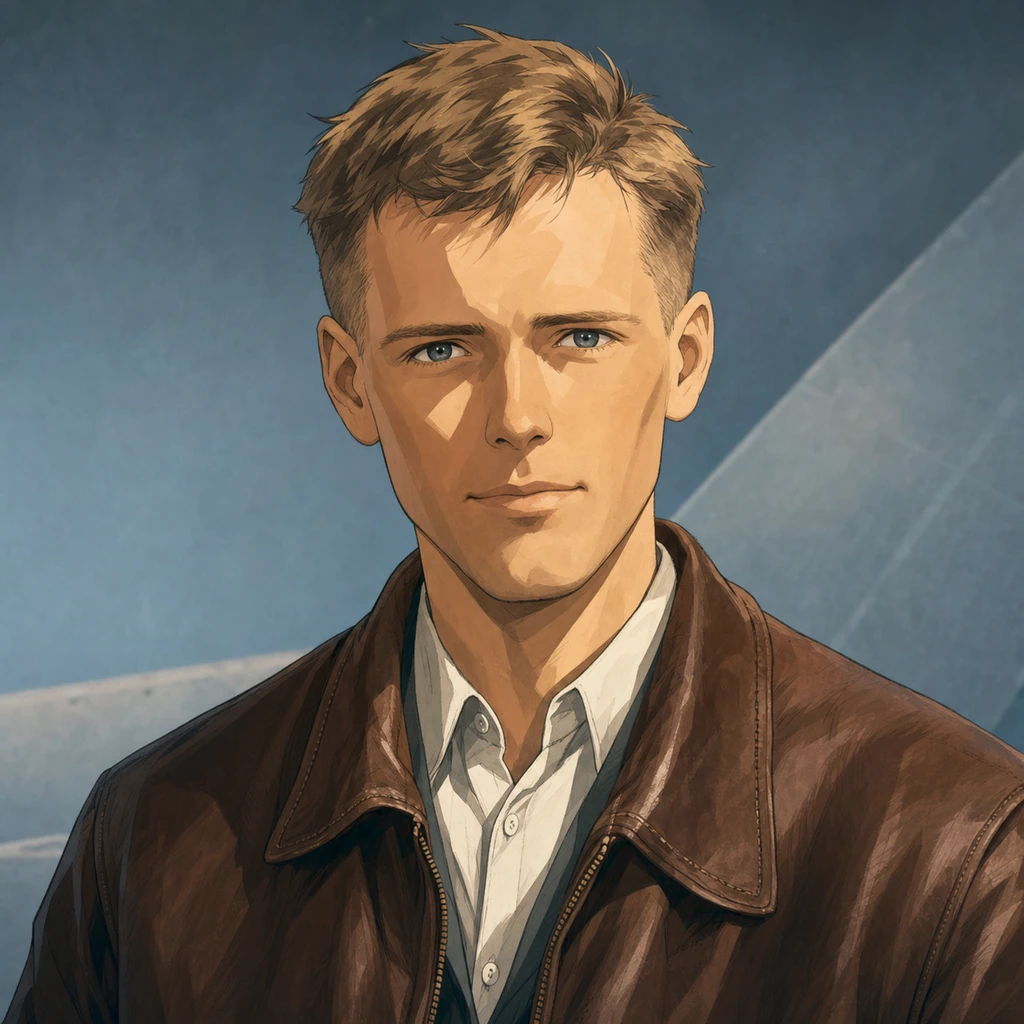
Biography for young readers
Charles Lindbergh
Being the first person to fly solo nonstop across the Atlantic Ocean.
- Lived
- 1902-1974
- From
- American
- Reading time
- About 4 min
- Reading guide
- Independent-reader guide
Watch Charles Lindbergh's story unfold
Why this story matters
A life worth remembering
Being the first person to fly solo nonstop across the Atlantic Ocean.
Think about it
What did you notice?
- Which moment changed the direction of this person's life?
- Which achievement or idea do you think mattered most?
- What is one question you would ask them?
Prefer to read? Open the complete biography transcript
From Machines to the Mail Route
Charles Augustus Lindbergh was born in Detroit, Michigan, on February 4, 1902, and spent much of his childhood near Little Falls, Minnesota. Cars, farm equipment, and other machines fascinated him at a time when powered flight was still new. He entered the University of Wisconsin in 1920 but left in 1922 to study flying in Lincoln, Nebraska.
Lindbergh first worked as a barnstormer, performing at air shows and giving passengers short rides. In 1924 he trained with the U.S. Army Air Service and earned a reserve commission. He then flew mail between St. Louis and Chicago. Airmail pilots often faced darkness and bad weather with few modern navigation tools, so the job sharpened the planning and endurance he would soon need.
Thirty-Three Hours Over the Atlantic
In 1927, St. Louis supporters helped Lindbergh compete for the Orteig Prize, offered for the first nonstop flight between New York and Paris. Ryan Airlines built a special single-engine plane to his requirements. He named it the Spirit of St. Louis. Its large fuel tank blocked the forward view, so he used side windows and a periscope.
Lindbergh took off from Roosevelt Field on May 20. After 33 hours and 30 minutes alone in the air, he landed at Le Bourget near Paris on May 21, completing the first solo nonstop transatlantic flight. The 3,610-mile journey made him internationally famous and sparked greater public interest in aviation. During a later national tour, he visited all 48 states then in the Union to encourage airports, airmail, and passenger flight.
Discovery, Grief, and Public Controversy
Lindbergh married writer and aviator Anne Morrow in 1929, and they surveyed long-distance air routes together. Their family then suffered a terrible loss: their 20-month-old son was kidnapped and killed in 1932. The heavily publicized crime and trial pushed the family to seek privacy in Europe. During the 1930s, Lindbergh also worked with scientist Alexis Carrel and glassblower Otto Hopf on a pump that kept organs functioning outside the body for laboratory study.
His public choices before World War II remain a crucial part of his story. Lindbergh visited Nazi Germany to study its air power and accepted a German medal in 1938. Back in the United States, he became a leading speaker for America First, which opposed entering the European war. In a September 1941 speech, he blamed Jewish people and other groups for pressing the country toward war. The statement repeated harmful antisemitic ideas and drew wide condemnation. After the attack on Pearl Harbor, Lindbergh supported the American war effort as a civilian technical adviser and flew combat missions in the Pacific.
Achievement and Responsibility
Lindbergh continued advising aviation companies after the war. His account of the Atlantic flight, The Spirit of St. Louis, received the 1954 Pulitzer Prize for biography. In later years he also supported wildlife and habitat conservation. He died on Maui, Hawaii, on August 26, 1974.
The 1927 flight proved that one carefully prepared pilot and airplane could cross the Atlantic nonstop, helping people imagine a more connected world. Yet Lindbergh's record also shows why technical achievement does not erase harmful public ideas. Remembering both parts gives a fuller lesson: skill and courage can change history, while fame also brings a responsibility to treat other people with fairness and care.
Did you know?
Fun facts about Charles Lindbergh
-
Lindbergh's 1927 New York-to-Paris flight lasted 33 hours and 30 minutes.
-
The Spirit of St. Louis had no forward windshield because a large fuel tank filled the space ahead of the cockpit.
-
Lindbergh flew airmail between St. Louis and Chicago before crossing the Atlantic.
-
He helped develop a glass pump that kept organs functioning outside the body for laboratory study.
-
His book The Spirit of St. Louis received the 1954 Pulitzer Prize for biography.
Learn & remember
Make the story yours
4 min read · Independent-reader guide
Three things to remember
- Known for: Being the first person to fly solo nonstop across the Atlantic Ocean.
- Lived: 1902-1974
- From: American
Quick check
What do you remember?
Think of an answer, then open each card to check.
What is Charles Lindbergh best known for?
Being the first person to fly solo nonstop across the Atlantic Ocean.
When did Charles Lindbergh live?
1902-1974
What place or nationality is connected to this story?
American
Biography
John Glenn
Being the first American to orbit Earth and a lifelong explorer of space and public service
Biography
Amelia Earhart
Being a brave pilot who broke flying records and inspired people around the world

Biography
Wright Brothers
They invented and flew the first successful powered airplane.

Biography
Neil Armstrong
Being the first person to walk on the Moon.
Biography
Orville Wright
Helping invent and fly the world’s first successful powered airplane with his brother Wilbur.
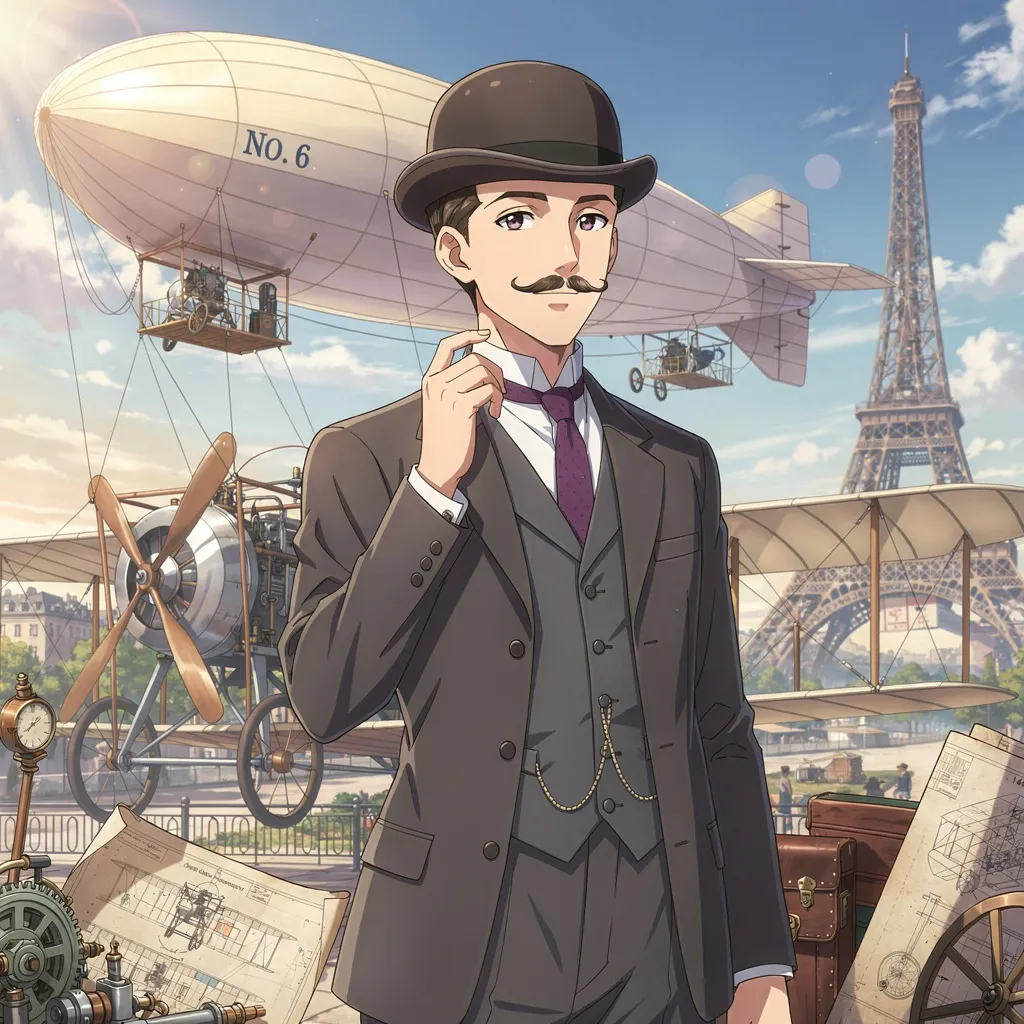
Biography
Alberto Santos-Dumont
A Brazilian aviation pioneer who helped make airplanes and airships practical and popular.
One story at a time
Who will you discover next?
Explore inspiring lives across science, art, history, music, and more.