
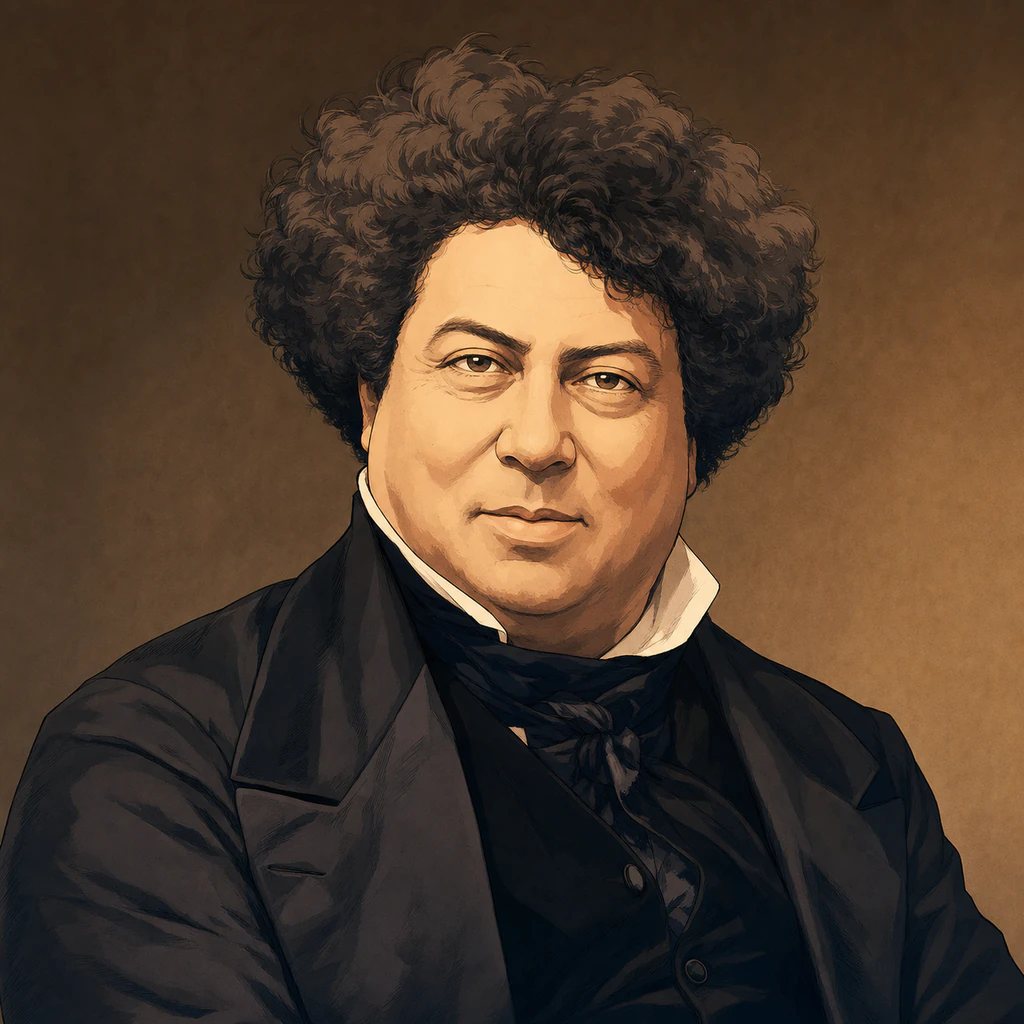
Biography for young readers
Alexandre Dumas (père)
Writing exciting adventure stories like The Three Musketeers and The Count of Monte Cristo.
- Lived
- 1802-1870
- From
- French
- Reading time
- About 4 min
- Reading guide
- Independent-reader guide
Watch Alexandre Dumas (père)'s story unfold
Why this story matters
A life worth remembering
Writing exciting adventure stories like The Three Musketeers and The Count of Monte Cristo.
Think about it
What did you notice?
- Which moment changed the direction of this person's life?
- Which achievement or idea do you think mattered most?
- What is one question you would ask them?
Prefer to read? Open the complete biography transcript
A Name With a Powerful Story
Before Alexandre Dumas created sword fights and secret treasures on the page, his own family history had crossed an ocean and a revolution. Alexandre Dumas Davy de la Pailleterie was born in Villers-Cotterêts, France, on July 24, 1802. His father, Thomas-Alexandre Dumas, became a general during the French Revolution. His paternal grandmother, Marie-Cessette Dumas, had been an enslaved Black woman in Saint-Domingue, now Haiti, and the family name Dumas came from her. Alexandre later faced racist insults because of his ancestry.
His father died in 1806, leaving the family with little money. Alexandre received limited formal schooling and worked for a local notary. Around age 20, he moved to Paris, found work as a copyist for the Duke of Orléans, read widely, and spent evenings learning how plays worked onstage.
Paris Applauds a New Playwright
Dumas first won fame in the theater. His historical drama Henry III and His Court opened at the Comédie-Française on February 11, 1829, and became a major success. Antony followed in 1831. Their fast action and strong emotion placed Dumas among the writers changing French drama during the Romantic movement.
Success gave him room to try many forms. He wrote more plays, reported on his travels, and helped start newspapers. In 1847 he opened the Théâtre Historique in Paris, where audiences could see ambitious dramas based on the past. The stage taught him skills that would also drive his novels: quick entrances, sharp dialogue, suspense, and endings that made people eager for the next scene.
Adventures Arrive One Chapter at a Time
During the 1840s, newspapers published long stories in short installments called serials. Dumas became a master of this format, but he did not work alone. His best-known collaborator, Auguste Maquet, researched history and prepared story plans or drafts; Dumas reshaped scenes, dialogue, and action. The books usually appeared under Dumas's name, and the exact share of credit became a subject of debate. The Morgan Library describes its first edition of The Three Musketeers as written in collaboration with Maquet.
The Three Musketeers appeared in 1844, and The Count of Monte Cristo followed in installments from 1844 to 1846. They mix invented heroes with real historical settings, so they are adventures rather than exact records of the past. After their success, Dumas built the Château de Monte-Cristo, including a small writing studio named the Château d'If. He celebrated its opening in 1847, but heavy debts forced him to sell the estate and leave for Belgium in 1851.
A Storyteller Who Kept Exploring
Dumas never stayed inside one kind of writing. He produced travel accounts, journalism, memoirs, and a large dictionary about cooking. He also supported Giuseppe Garibaldi's campaign for a united Italy and spent part of the early 1860s in Naples. These projects show the same curiosity that filled his fiction, although not every plan succeeded and his finances often remained troubled.
Dumas died near Dieppe on December 5, 1870, at age 68. In 2002, France honored him by moving his remains to the Panthéon in Paris. His novels have inspired plays, films, comics, and new editions around the world. Their lasting contribution is larger than swordplay: Dumas showed how teamwork, cliff-hangers, humor, and questions about loyalty or justice could invite generations of readers into history while still making room for imagination.
Did you know?
Fun facts about Alexandre Dumas (père)
-
Alexandre Dumas's family name came from his paternal grandmother, Marie-Cessette Dumas.
-
His 1829 play Henry III and His Court made him famous before his best-known novels appeared.
-
The Morgan Library catalogs its first edition of The Three Musketeers as written with Auguste Maquet.
-
His small writing studio at the Château de Monte-Cristo was named the Château d'If.
-
Dumas created a large dictionary about food and cooking as well as novels, plays, and travel writing.
Learn & remember
Make the story yours
4 min read · Independent-reader guide
Three things to remember
- Known for: Writing exciting adventure stories like The Three Musketeers and The Count of Monte Cristo.
- Lived: 1802-1870
- From: French
Words to know
Open a word for a short explanation.
revolution
A major and often rapid change in government or society.
Quick check
What do you remember?
Think of an answer, then open each card to check.
What is Alexandre Dumas (père) best known for?
Writing exciting adventure stories like The Three Musketeers and The Count of Monte Cristo.
When did Alexandre Dumas (père) live?
1802-1870
What place or nationality is connected to this story?
French
Biography
Victor Hugo
Writing famous stories like Les Misérables and The Hunchback of Notre-Dame.
Biography
Honoré de Balzac
A famous French writer who created a huge collection of stories about everyday life called La Comédie humaine.

Biography
Charles Dickens
Being a famous writer who created exciting stories and memorable characters.
Biography
Émile Zola
A famous French writer who told powerful stories about real life and stood up for fairness.

Biography
Albert Camus
A famous writer who shared big ideas about life through stories and won the Nobel Prize in Literature.
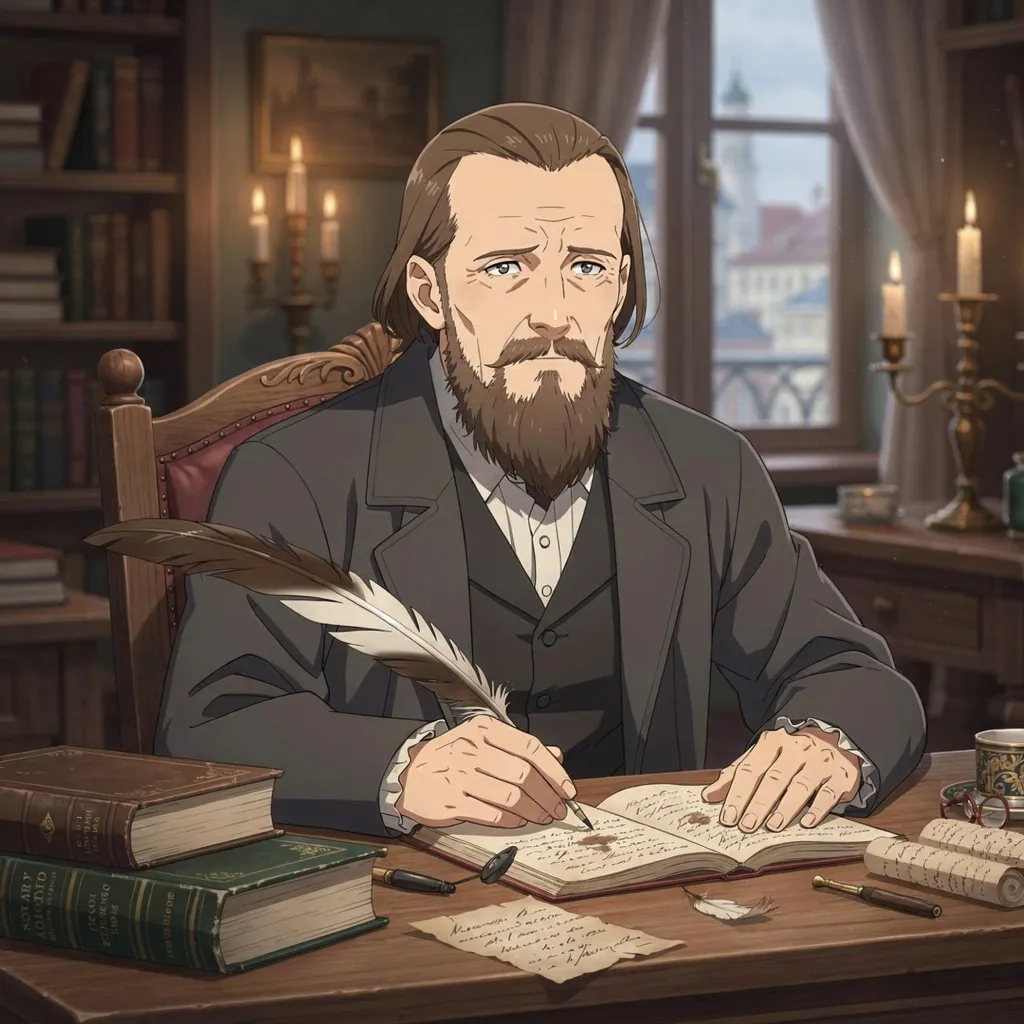
Biography
Fyodor Dostoevsky
Writing deep and thoughtful novels that explore feelings, choices, and what it means to be human
One story at a time
Who will you discover next?
Explore inspiring lives across science, art, history, music, and more.