
Helping develop the telegraph and Morse code
Helping develop the telegraph and Morse code
Samuel Morse was born in 1791 in Charlestown, Massachusetts, United States. As a child, he was curious and loved learning new things. He enjoyed drawing and painting, and he was also very interested in science and new ideas.
Samuel went to Yale College, where he studied art and attended lectures about electricity. Even though electricity was a new and mysterious topic at the time, it sparked his imagination. These early interests helped shape his future in surprising ways.
Before becoming an inventor, Samuel Morse wanted to be a famous artist. He painted portraits of important people and traveled to Europe to study art. Some of his paintings were shown in museums and galleries, and he was respected as an artist.
Even though he was talented, making a living as an artist was not easy. Samuel had to work very hard, and sometimes he struggled to earn enough money. Still, he never gave up on learning and trying new ideas.
One day, while traveling on a ship, Samuel heard people talking about electricity and communication. He wondered, “What if messages could travel quickly over long distances?” At that time, messages could take days or even weeks to arrive.
Samuel began working on a machine that could send messages using electrical signals. With help from other inventors, this machine became known as the telegraph. It used wires to send signals from one place to another.
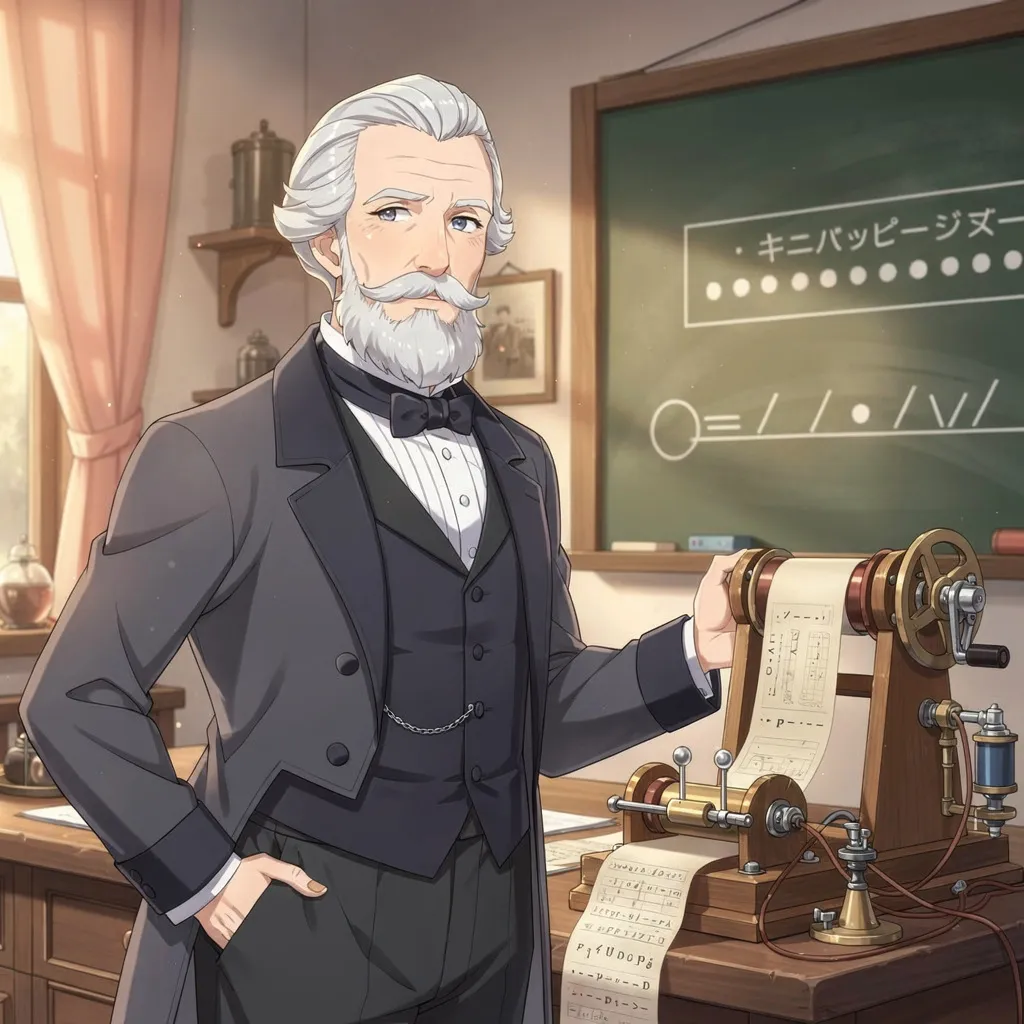
To make the telegraph work better, Samuel Morse and his partner Alfred Vail helped create a special code made of dots and dashes. This system was called Morse code. Each letter had its own pattern, which made messages faster to send.
In 1844, Samuel sent the first successful long-distance telegraph message from Washington, D.C., to Baltimore. The message was “What hath God wrought!” It was a huge success and changed how people communicated. Soon, telegraph lines spread across countries and continents.
Samuel Morse’s work helped the world feel smaller by connecting people faster than ever before. His ideas helped lead to future inventions, like the telephone and eventually the internet.
Today, Samuel Morse is remembered as both a creative artist and an important inventor. His life shows that it’s okay to have many interests and that great ideas can come from curiosity and hard work.
Samuel Morse was a professional painter before he became an inventor.
Morse code is still used today by some radio operators.
The first telegraph message said, “What hath God wrought!”
Samuel Morse helped start the National Academy of Design for artists.
3 min read · Independent-reader guide
Open a word for a short explanation.
A new device, method, or idea that someone creates.
Think of an answer, then open each card to check.
Helping develop the telegraph and Morse code
1791–1872
American

Inventing and improving useful devices like the electric light bulb and the phonograph that changed everyday life

Inventing early wireless radio technology that allowed messages to travel through the air.

Inventing the Braille reading and writing system for people who are blind or have low vision
Discovering how electricity and magnetism work together and helping create electric motors
A famous American inventor, writer, and leader who helped shape the United States.

A famous American writer known for funny and adventurous stories like The Adventures of Tom Sawyer.
Explore inspiring lives across science, art, history, music, and more.