
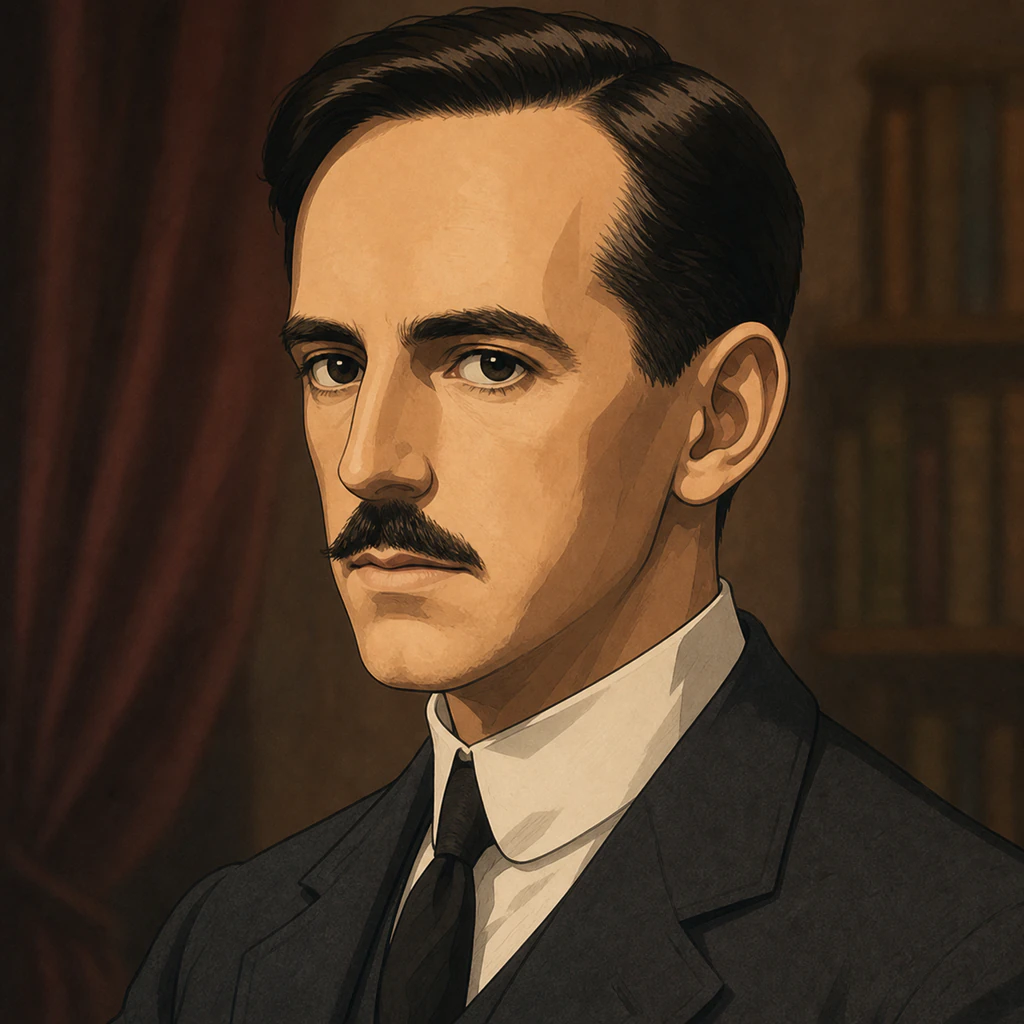
Biography for young readers
Eugene O'Neill
Being one of America’s greatest playwrights and helping make American theater famous around the world.
- Lived
- 1888-1953
- From
- American
- Reading time
- About 3 min
- Reading guide
- Independent-reader guide
Watch Eugene O'Neill's story unfold
Why this story matters
A life worth remembering
Being one of America’s greatest playwrights and helping make American theater famous around the world.
Think about it
What did you notice?
- Which moment changed the direction of this person's life?
- Which achievement or idea do you think mattered most?
- What is one question you would ask them?
Prefer to read? Open the complete biography transcript
A Childhood on the Theater Road
Eugene Gladstone O'Neill entered the world in a Broadway hotel room in New York City on October 16, 1888. His father, James O'Neill, was a touring actor famous for playing the Count of Monte Cristo. Eugene's mother, Ella, traveled with the company, so his earliest years unfolded in hotels, railroad cars, and theaters rather than one steady home. He later attended boarding schools and spent the 1906–1907 school year at Princeton University, but he did not graduate.
As a young man, O'Neill searched for direction far beyond a classroom. He joined a gold-prospecting trip to Honduras, held jobs in Buenos Aires, and worked aboard ships. The sailors, dockworkers, and wanderers he met gave him firsthand knowledge of people rarely placed at the center of serious American plays.
Turning Hard Years into Plays
By 1912, O'Neill was back in the United States and seriously ill with tuberculosis. During months of recovery at a Connecticut sanatorium, he read plays and decided to become a dramatist. He soon studied playwriting and began shaping his sea experiences into short works. His characters spoke plainly about fear, loneliness, hope, and disappointment.
The experimental Provincetown Players staged his one-act sea play Bound East for Cardiff and included it in their first New York season in 1916. Their small theater gave O'Neill room to test new ideas. Instead of offering only light entertainment or tidy endings, he treated working people and troubled families as subjects worthy of tragedy.
Changing the American Stage
O'Neill's first full-length Broadway success, Beyond the Horizon, opened in 1920 and won the Pulitzer Prize for Drama. The Emperor Jones used expressionist staging to enter a ruler's frightened mind, while Anna Christie drew on the waterfront world O'Neill knew. Anna Christie brought a second Pulitzer in 1922, and the experimental Strange Interlude earned a third in 1928.
His plays could be painful because they explored addiction, prejudice, family conflict, and dreams that collapse. Modern audiences also examine how some works portray race and gender. Yet O'Neill helped prove that American theater could tackle difficult ideas with the ambition of major literature. In 1936, he became the first American playwright awarded the Nobel Prize in Literature.
Writing with Pity and Understanding
O'Neill moved to Tao House near Danville, California, in 1937. There he wrote several late plays, including The Iceman Cometh and the deeply autobiographical Long Day's Journey into Night. That family drama faces addiction and blame without pretending any one person caused every hurt. O'Neill completed it in the early 1940s but asked that it be kept from the public during his lifetime.
A worsening tremor eventually made writing by hand nearly impossible. O'Neill died in Boston on November 27, 1953. Long Day's Journey into Night reached the stage after his death and won the 1957 Pulitzer, his fourth. Across his career, O'Neill expanded who and what could appear in a serious American play. His lasting contribution was a theater willing to look honestly at imperfect people while still searching for compassion.
Did you know?
Fun facts about Eugene O'Neill
-
Eugene O'Neill was born in a Broadway hotel room while his father's acting career kept the family on tour.
-
His early jobs included working at sea, and sailors later became central characters in several of his plays.
-
The Provincetown Players included O'Neill's Bound East for Cardiff in their first New York season in 1916.
-
O'Neill received four Pulitzer Prizes for Drama: three during his lifetime and one after his death.
-
In 1936, O'Neill became the first American playwright to receive the Nobel Prize in Literature.
Learn & remember
Make the story yours
3 min read · Independent-reader guide
Three things to remember
- Known for: Being one of America’s greatest playwrights and helping make American theater famous around the world.
- Lived: 1888-1953
- From: American
Quick check
What do you remember?
Think of an answer, then open each card to check.
What is Eugene O'Neill best known for?
Being one of America’s greatest playwrights and helping make American theater famous around the world.
When did Eugene O'Neill live?
1888-1953
What place or nationality is connected to this story?
American

Biography
Tennessee Williams
He was a famous playwright who wrote powerful and emotional plays for the theater.

Biography
George Bernard Shaw
A famous writer who created clever plays filled with humor and big ideas
Biography
Oscar Wilde
Being a famous writer known for his clever plays, poems, and stories full of humor and imagination

Biography
Arthur Miller
Writing famous plays that explore family, dreams, and standing up for what is right
Biography
Harold Pinter
A famous playwright who won the Nobel Prize in Literature for his powerful and thoughtful plays.

Biography
William Shakespeare
Writing famous plays and poems that are still loved all around the world
One story at a time
Who will you discover next?
Explore inspiring lives across science, art, history, music, and more.