
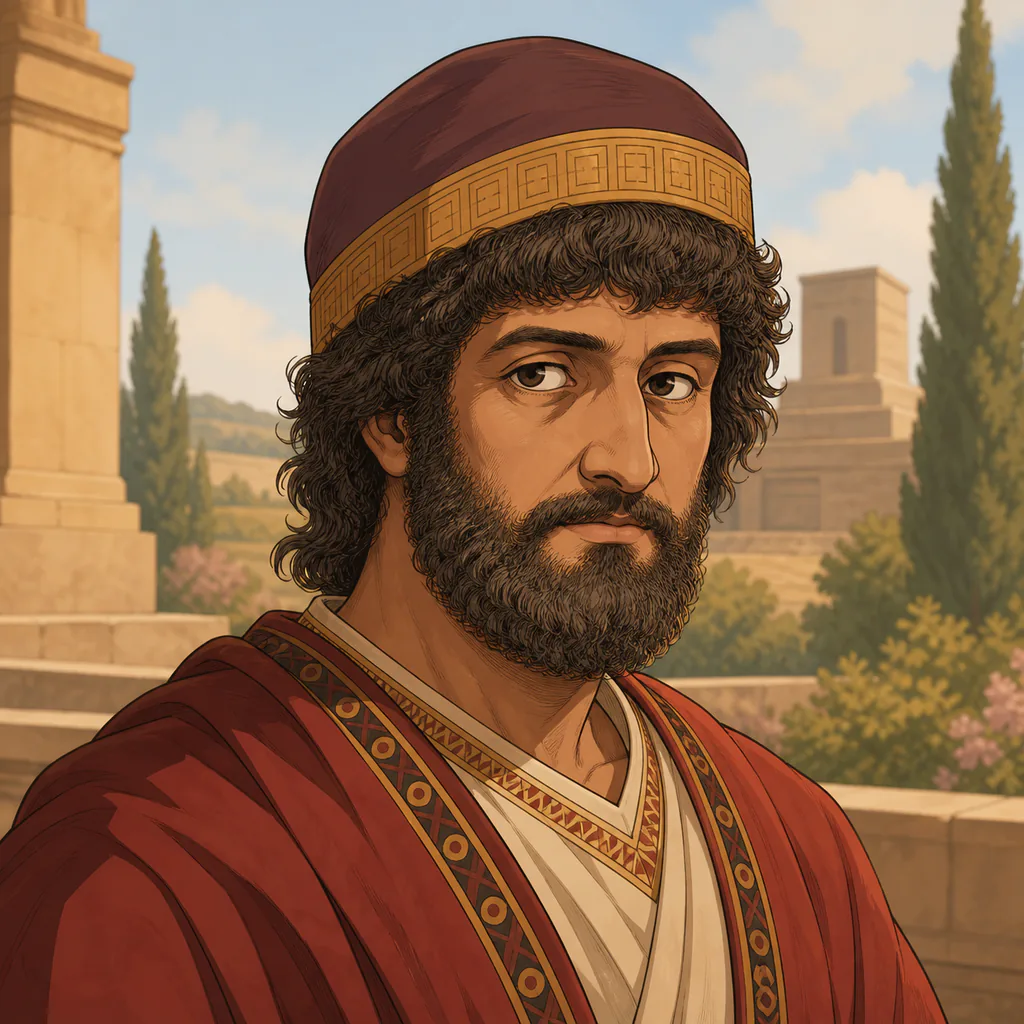
Biography for young readers
Cyrus the Great
Founding the Persian Empire and being known as a fair and respectful ruler
- Lived
- c. 600 BCE – 530 BCE
- From
- Persian (ancient Iran)
- Reading time
- About 4 min
- Reading guide
- Independent-reader guide
Watch Cyrus the Great's story unfold
Why this story matters
A life worth remembering
Founding the Persian Empire and being known as a fair and respectful ruler
Think about it
What did you notice?
- Which moment changed the direction of this person's life?
- Which achievement or idea do you think mattered most?
- What is one question you would ask them?
Prefer to read? Open the complete biography transcript
A Persian King Challenges an Empire
Nearly 2,600 years ago, Cyrus II turned a small Persian kingdom into the beginning of a vast new empire. He was born around 600 BCE and belonged to a royal family that ruled Anshan, in the region of modern Iran. Cyrus became king around 559 BCE.
Ancient writers told dramatic stories about his childhood, including tales of a baby hidden from a fearful king. Those authors wrote long after Cyrus lived, and their versions disagree, so historians treat the adventures as legend rather than proven biography.
Persia then answered to the powerful Median king Astyages. Cyrus rebelled and defeated him around 550 BCE, although surviving sources differ about the campaign's exact dates and events. He brought Persian and Median lands under one rule and developed Pasargadae as an early capital.
Building a Vast, Diverse Empire
Cyrus next expanded west into Anatolia. During the 540s BCE, his forces defeated King Croesus of Lydia and captured Sardis, giving the Persians control of a wealthy kingdom and many Greek cities along the Aegean coast. Cyrus also extended his authority east toward Central Asia and the northwestern edge of the Indian subcontinent.
These victories came through warfare, demands for tribute, and the loss of independent kingdoms. Cyrus was an effective conqueror, not a peaceful modern elected leader. Yet he often kept local customs and officials instead of forcing every conquered community to become culturally Persian.
Pasargadae shows this mixture in stone. Its palaces and gardens combined ideas and skilled work from several parts of the empire. The garden plan, divided into four sections by paths or waterways, influenced later Persian garden design.
Babylon and the Famous Cylinder
In 539 BCE, Cyrus's army defeated Babylonian forces at Opis, took Sippar, and entered Babylon after the city surrendered. Cyrus arrived later that month and presented himself as a legitimate Babylonian king. His empire now included much of the ancient Near East.
A clay foundation inscription known as the Cyrus Cylinder described the change of rule in the Babylonian language and religious tradition. It praised Cyrus, criticized the previous king, and said that sacred statues and displaced groups could return to their home cities. Other evidence connects Cyrus's reign with the return of some Judean exiles and the rebuilding of their temple in Jerusalem.
The cylinder is sometimes called the first charter of human rights, but historians caution that it was a royal message, not a modern promise of equal rights for every person. It remains valuable evidence of how Cyrus used restoration, local traditions, and royal propaganda to govern a conquered city.
An Uncertain Death and a Lasting Example
Cyrus died in 530 BCE during or soon after a campaign on his empire's northeastern frontier. Later writers disagreed about where and how he died, so the famous story that Queen Tomyris defeated him cannot be treated as certain. His body was buried in a simple stone tomb at Pasargadae, and his son Cambyses II succeeded him.
Cyrus's empire continued under later Achaemenid rulers, who developed its administration, roads, and monumental cities. Greek authors remembered him as a remarkable leader, while Persian, Babylonian, and Jewish traditions preserved different parts of his story.
His wider contribution was showing that a huge empire could draw many peoples into one political system while leaving room for local languages, religions, and customs. Studying Cyrus also reminds us to separate later legends and modern praise from the limited ancient evidence—and to remember that flexible government and military conquest were both parts of his achievement.
Did you know?
Fun facts about Cyrus the Great
-
Cyrus called himself king of Anshan in cuneiform inscriptions.
-
Ancient writers preserved several conflicting stories about Cyrus's childhood.
-
The four-part garden plan at Pasargadae influenced later Persian garden design.
-
The Cyrus Cylinder was written in Babylonian cuneiform after the conquest of Babylon in 539 BCE.
-
Cyrus's limestone tomb still stands at Pasargadae in modern Iran.
Learn & remember
Make the story yours
4 min read · Independent-reader guide
Three things to remember
- Known for: Founding the Persian Empire and being known as a fair and respectful ruler
- Lived: c. 600 BCE – 530 BCE
- From: Persian (ancient Iran)
Words to know
Open a word for a short explanation.
empire
A group of lands or peoples ruled by one government or leader.
evidence
Information used to support or test an idea.
Quick check
What do you remember?
Think of an answer, then open each card to check.
What is Cyrus the Great best known for?
Founding the Persian Empire and being known as a fair and respectful ruler
When did Cyrus the Great live?
c. 600 BCE – 530 BCE
What place or nationality is connected to this story?
Persian (ancient Iran)
Biography
Alexander the Great
Building one of the largest empires in ancient history and spreading Greek culture across many lands
Biography
Qin Shi Huang
Being the first emperor to unite China and create a strong, organized empire.
Biography
Genghis Khan
Founding the Mongol Empire and uniting many nomadic tribes into one strong nation
Biography
Marcus Aurelius
Being a Roman emperor who wrote wise thoughts about kindness, self-control, and doing the right thing.
Biography
Akbar the Great
A powerful and wise emperor who helped unite much of South Asia and encouraged fairness, learning, and cooperation.
Biography
Ashoka the Great
An Indian emperor who chose peace, kindness, and learning to guide his empire.
One story at a time
Who will you discover next?
Explore inspiring lives across science, art, history, music, and more.