
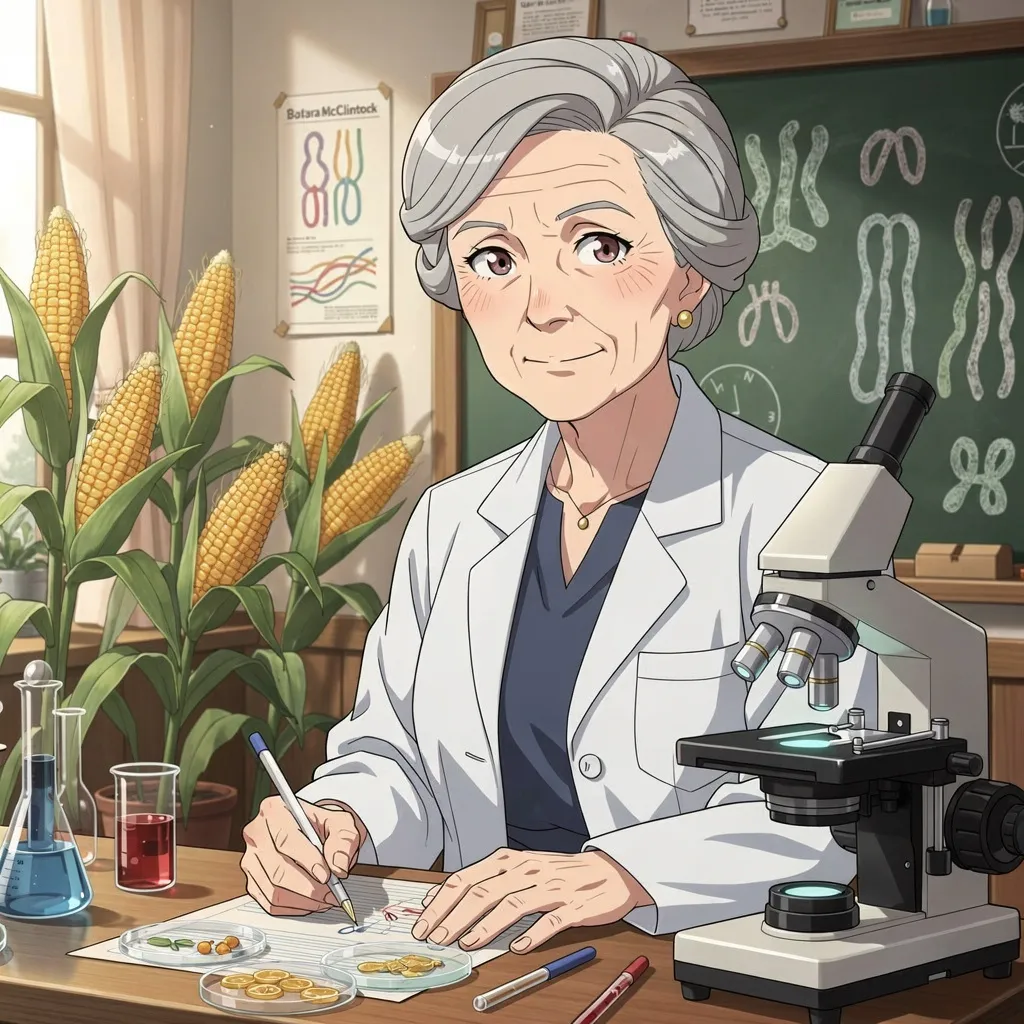
Discovering "jumping genes" and changing how scientists understand genetics
Discovering "jumping genes" and changing how scientists understand genetics
Barbara McClintock was born in 1902 in Hartford, Connecticut. As a child, she was curious and loved solving puzzles and exploring how things worked. She enjoyed learning and often asked many questions about the world around her.
Barbara went to Cornell University, where she studied biology. At first, she felt a bit different from other students because not many women became scientists back then. Still, she worked hard and followed her love for learning.
Barbara became very interested in genetics, which is the study of how living things grow and change. She chose to study corn plants because they were colorful and easy to observe. By carefully watching corn kernels, she learned how traits are passed down.
She was known for being patient and focused. Barbara could spend hours looking through a microscope, taking careful notes, and thinking deeply about what she saw.
Barbara made a surprising discovery while studying corn. She found that some genes can move from one place to another inside a cell. She originally called these moving genes "controlling elements." Later, they became popularly known as "jumping genes." Today, scientists call them "transposons."
At first, many people did not understand her idea. It was very new and different. Barbara stayed confident and kept doing her research because she believed in her work.
Years later, other scientists realized that Barbara was right. Her discovery helped explain how plants, animals, and even humans develop and change. It also helped scientists learn more about diseases.
In 1983, Barbara McClintock won the Nobel Prize in Physiology or Medicine. She was the first woman to win this prize alone in that field.
Barbara McClintock showed that being curious and patient can lead to amazing discoveries. She proved that it is important to trust your ideas, even if others don’t understand them right away.
Today, scientists around the world still learn from her work. She is remembered as a brave thinker who helped unlock the secrets of genes.
Barbara preferred working alone in her lab where she could think quietly.
She studied colorful corn kernels to understand genetics better.
Her discovery was ignored for many years before becoming famous.
She loved nature and often took long walks to think about science.
2 min read · Developing-reader friendly
Think of an answer, then open each card to check.
Discovering "jumping genes" and changing how scientists understand genetics
1902-1992
American

Helping discover the double helix shape of DNA, which explains how life grows and works
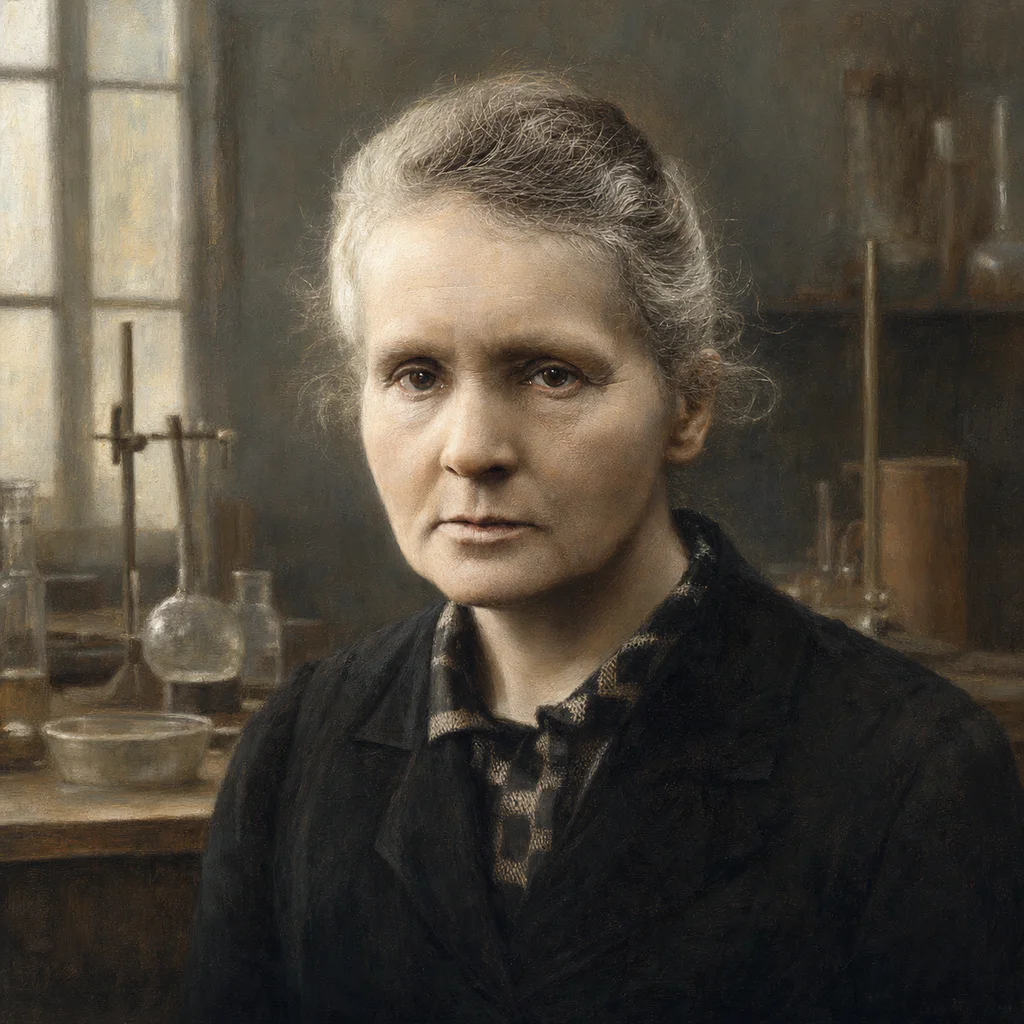
Discovering new elements and becoming the first person to win two Nobel Prizes

Helping discover the double-helix shape of DNA
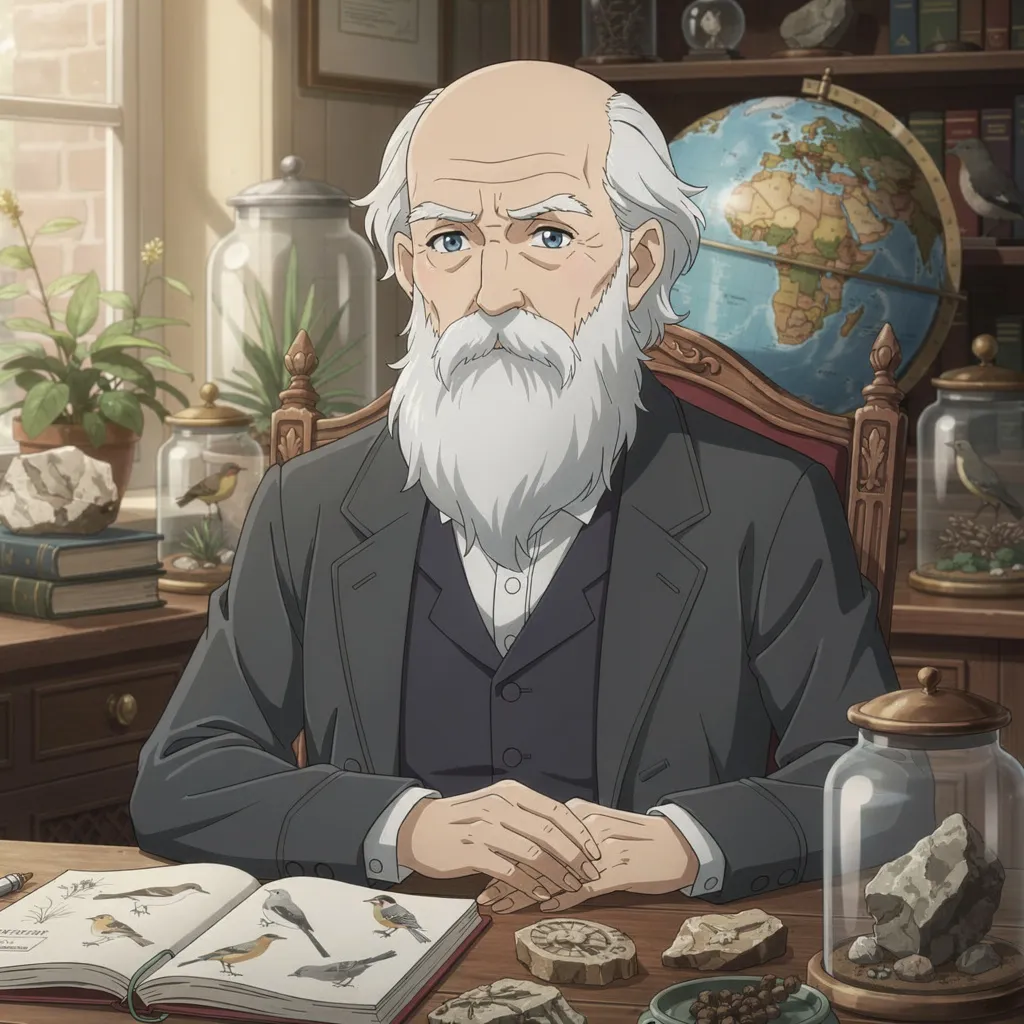
He was a scientist who explained how living things change over time through a process called evolution.
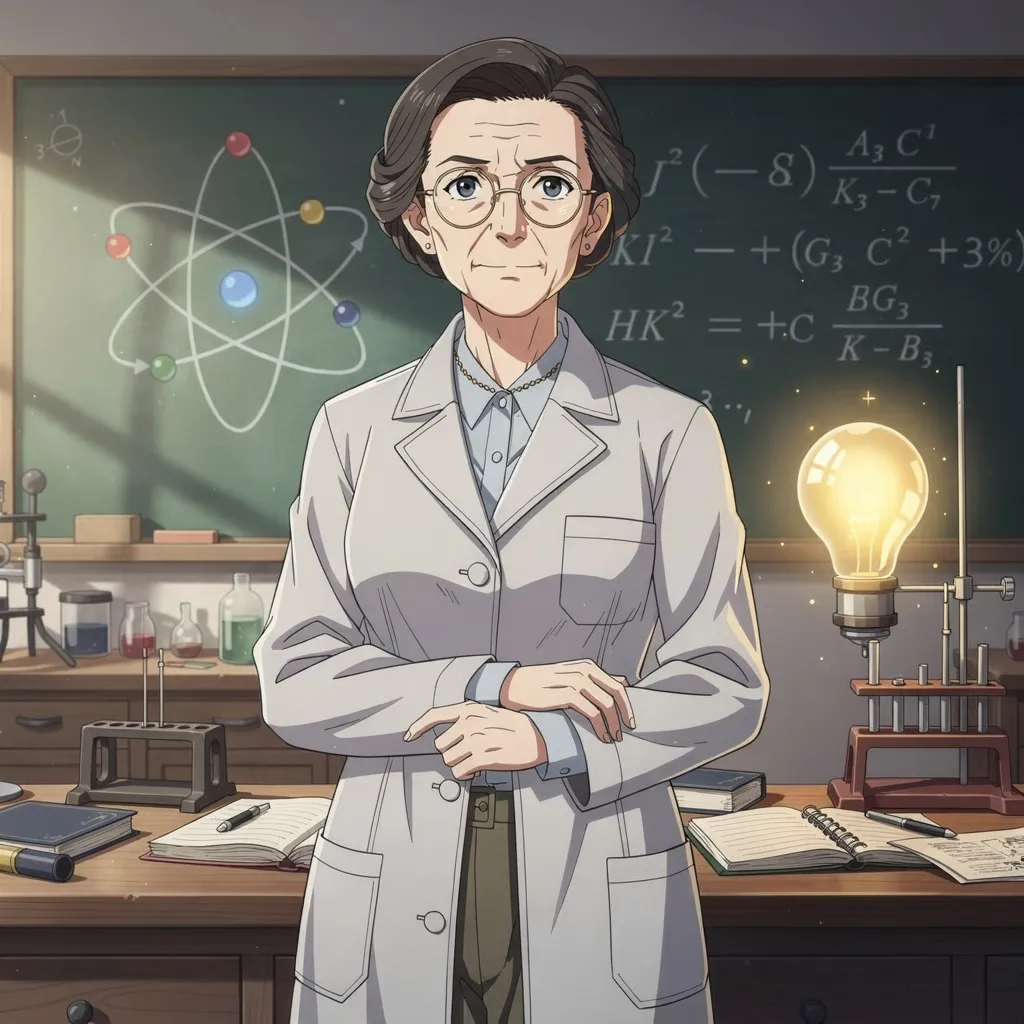
Helping explain nuclear fission and opening new doors in science
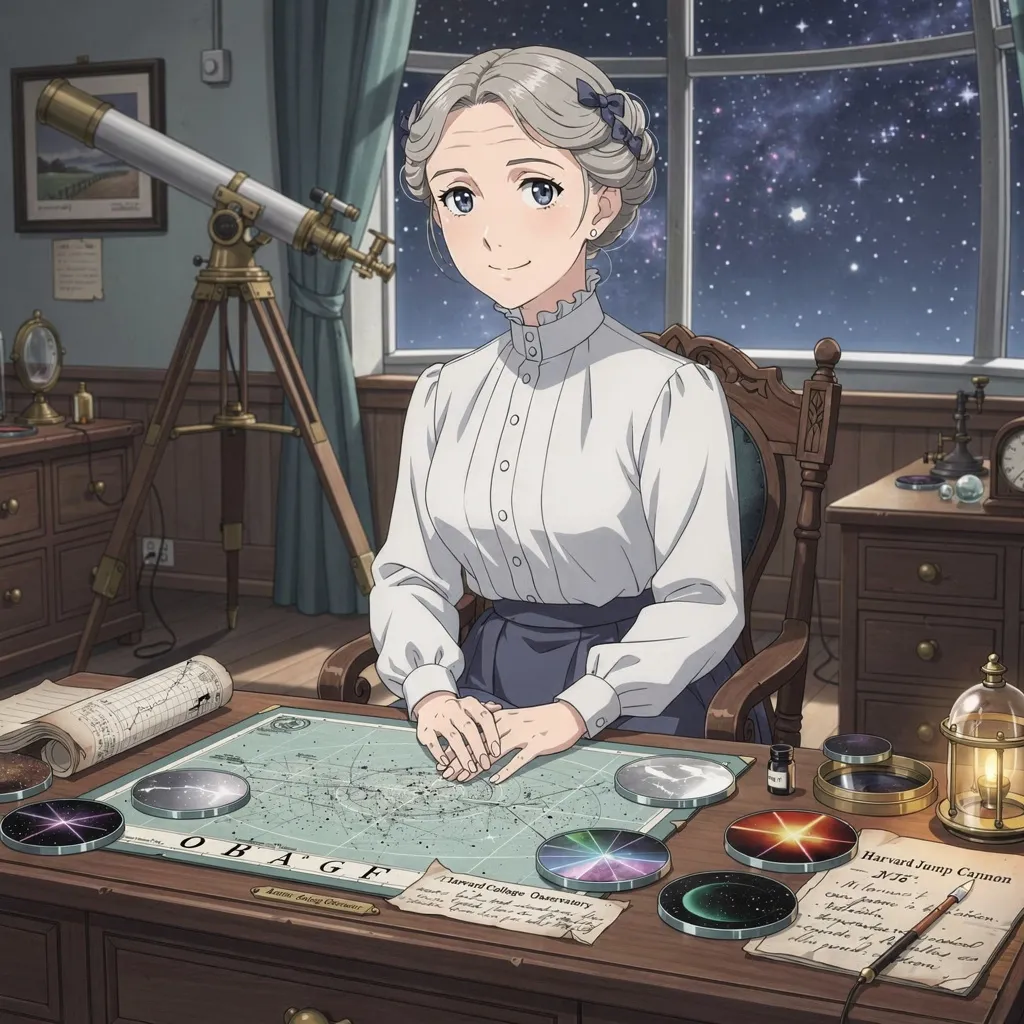
Creating a simple system to classify stars that astronomers still use today
Explore inspiring lives across science, art, history, music, and more.